Kings Canyon
Hi There,
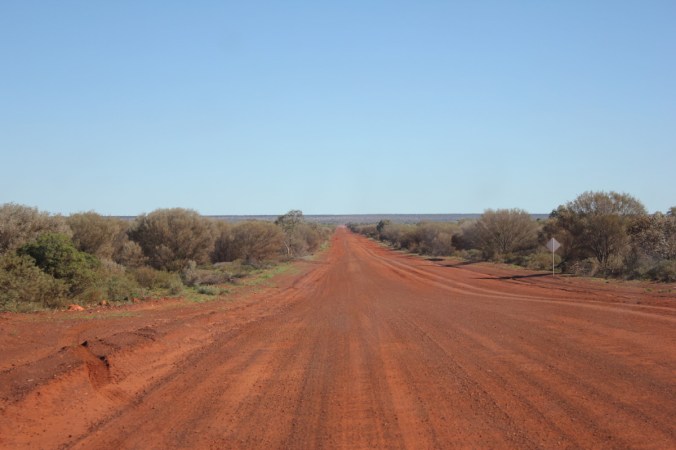
Now I never thought that I would do a nine part and counting series on our three-week holiday to the Northern Territory, but here we are! No need to panic just yet, I can assure you that it wont be long and we’ll be on the home stretch. Meanwhile the stretch of road we were facing now was the Meerenie Loop. A 154km stretch of dirt road which is a short cut to get to Kings Canyon, you can go the long way its only about 500km! For the Meerenie loop you need a permit as it goes through some Aboriginal Land Trust area, also a 4 wheel drive vehicle of some description would be beneficial although not mandatory. I’ve taken the next bit from The Outback Travellers Track Guide Book for Alice Springs to Yulara. “The Meerenie Loop is very undulating with many crests, dips and creek floodways. This area is mainly gravel with some rocky sections but is often plagued with corrugations and dusty conditions”.
 To say it was corrugated and dusty would be a slight understatement to say the least! The first section was an absolute quagmire of corrugations and at a slow speed you felt like you were on some sort of manic rollercoaster, every bump was a shudder of immense proportions. This was going to be great for another 140 kilometres. It did improve though. We decided to see what would happen at a faster speed! Well it was an improvement at a speed of 75-85kmh, mind you it was now a constant smaller shuddering. I can only describe it as a cat the size of an elephant purring beneath your car with the reverberations oozing up into the vehicle and oneself. Everything was just a constant shudder!

 You can see above the dips and creek floodways, these were the worst. As you approached you would slow down to get across them and occasionally some were quite deep with pot holes in them which the front tyres would slam into with a tremendous thump. It all sounds bad but it was an enjoyable experience and the scenery was quite beautiful. Look at the rolling seam of rock in the left side of the photo above.

 There was a couple of classic road signs we saw, both on 44 gallon drums, one before a corner “LIFT UM FOOT” and the other around the corner “PUTTUN BACK DOWN”. I was too slow in getting any shots but click HERE to check them out! What a classic!. Having stopped for lunch and then continued on our way we soon came to Ginty’s Lookout.
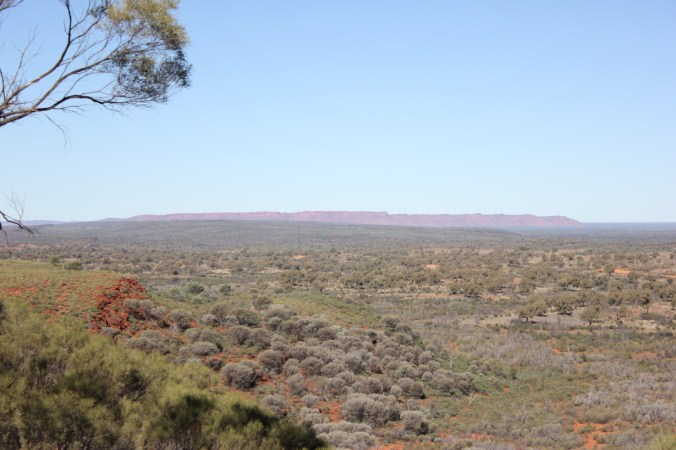
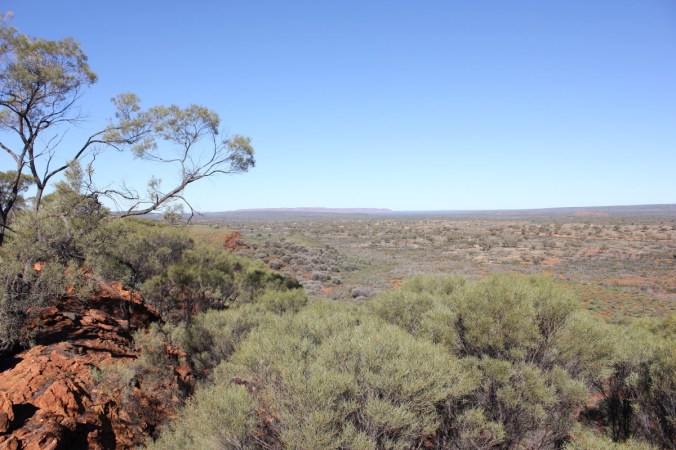 In the distance you can see George Gills Range and Kings Canyon is at the right hand end of this range in these photos.
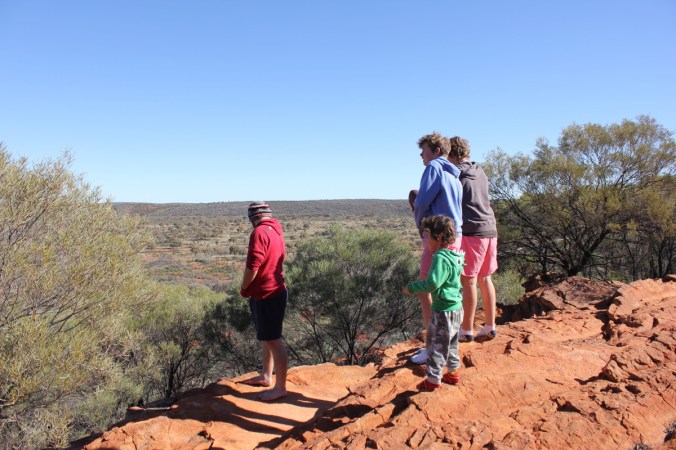
 I think the boys enjoyed a chance to stretch and let off some steam, also gave me a chance to quickly check the vehicle and camper trailer were all in one piece. There was a slight problem with the bike rack attachment on the camper trailer, parts of it had come loose and needed replacement, luckily I had spares!
 Of course there were plants to admire, check out this pretty Erimophila!
 Cant remember how long it took to complete our journey along the Meerenie loop but we had finally arrive at Kings Canyon. Just in time to set up camp and then watch the suns rays set on the entrance to the canyon.

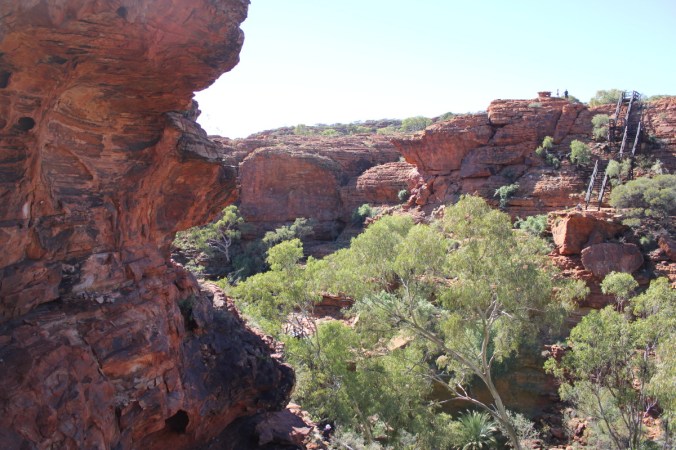
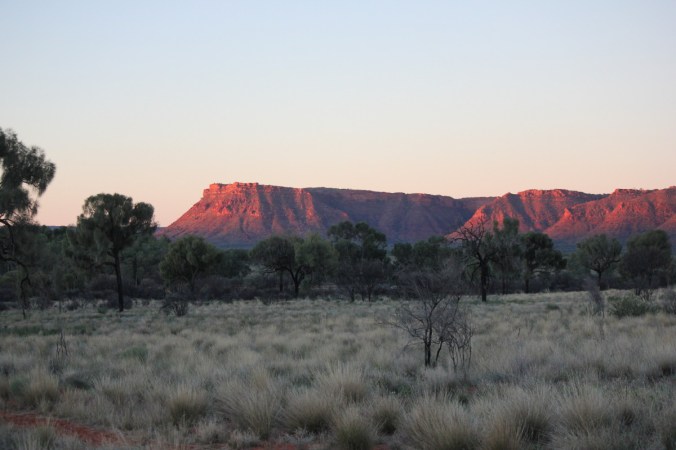 The next morning dawned fresh and bright and away we went to get amongst the Canyon. Kings Canyon is part of the Watarrka National Park and sits at the west end of the George Gills Range. The walls in the canyon are over 100 metres high and make for some great panoramic views. Here we go on the rim walk which is highly recommended, give yourself at least 4 hours to truly appreciate this place and watch out for the opening climb, it will test you! Make sure you stop on the way up this straight up climb to admire the views, just don’t let on that you’re puffed!
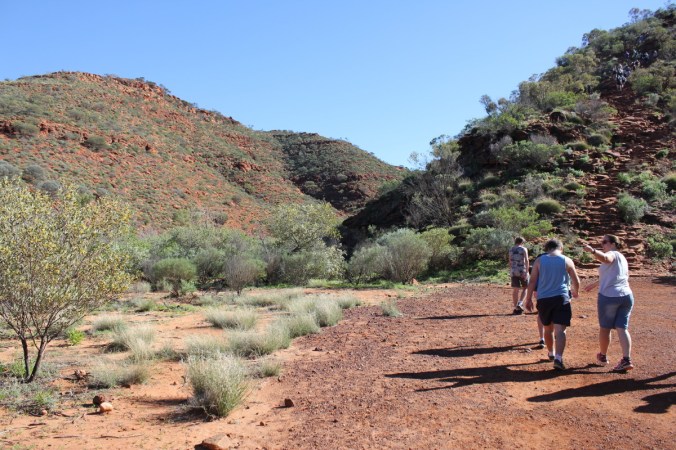 Here’s one of my scenic views(puff,puff,puff) lucky there was some plants to look at!

 Above is Tall Mulla Mula also known as Pussytails or scientifically as Ptilotus exaltatus. Below is a Blue Bush. Maireana sp, I’m not sure which one, there are 57 specie endemic to Australia.
 Now that I’ve got my breath back, lets continue up the steep climb!
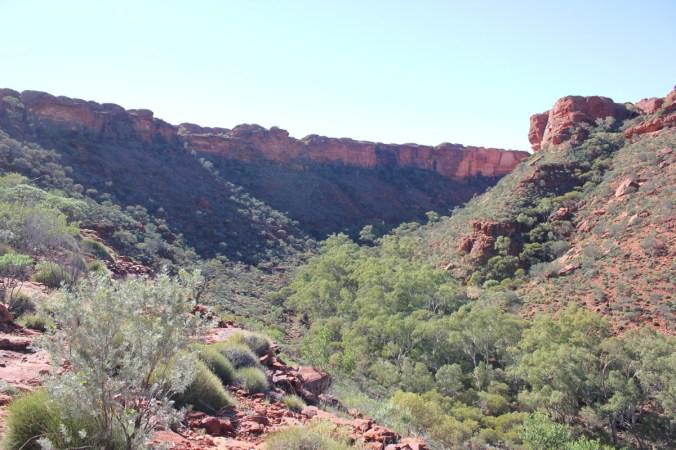
 In the above photo in the middle on the right you can see the car park receding in the distance. Below you can see the canyon walls starting to come into view. The river of green at the bottom is Kings Creek, providing the life blood for those plants.
Once you get to the top the rest of the Rim walk is quite easy and breathtaking at the same time! Firstly you are walking through scrubland and rocky formations before you really get anywhere near the rim. Mind you, you don’t want to get too close to the edge!

 Picture below is of Sandstone mounds which are quite prolific up on the top of the George Gills Range. They are known as Mereenie Sandstone which has been cross bedded. Basically over time(lots of time) wind has deposited sand in different directions(see description in next photo). The domes you see have been eroded along joint-bounded blocks with rain and wind eroding the corners and sides of the blocks giving us these domed shaped sandstone mounds.
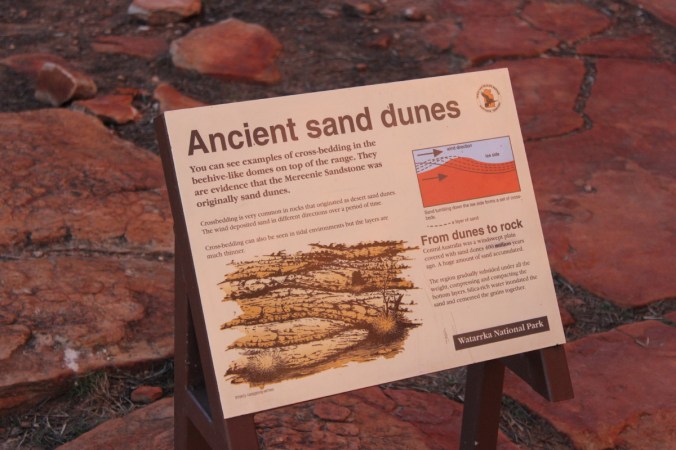
 Looking closely below you will see Rhinoceros Rock. Well that’s what I called it!
 These two photos you can see those Sandstone domes I mentioned earlier.
 Now we come to parts where you need to hold your breath as you edge closer to the edge.
 It is a shear drop off the edge there!
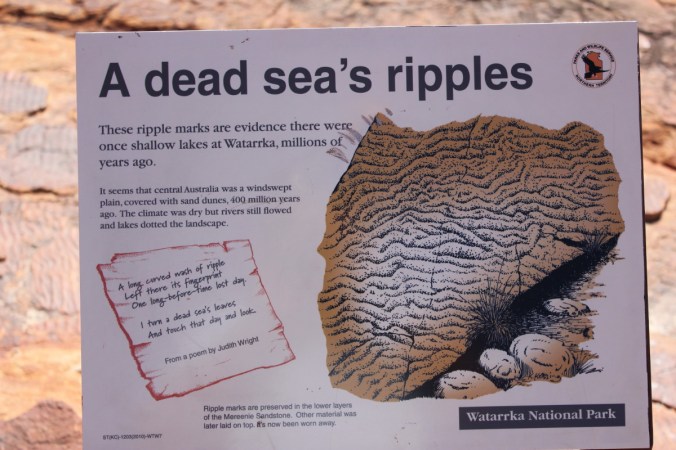
Kings Canyon sits in what is known as the Amadeus Basin which is a intracratonic depression covering approximately 170,000 square Kilometres in Central Australia. Interpret that as an inland sea I would think! Now I will quote the Geology of Kings Canyon National Park by L. Bages, report 4 for the Northern Territory Geological Survey. “The oldest exposed rocks in the park are those of the shallow-marine to continental Cambrian Pertaoorrta Group. This group is conformably overlain by the marine Cambro-Ordovician Larapinta Group which is conformably overlain by the shallow-marine Mereenie Sandstone. The sequence was gently folded, faulted and partly joined during the Alice Springs Orogeny between 400-300 million years ago. Since the Carboniferous, the area has undergone a long period of erosion. During the Tertiary, the climate was tropical; fluvial sediments were deposited in places and silcrete and ferricrete were formed. During a period which lasted from the late Tertiary to the Quaternary, acolian sand dunes and sheets, which now cover large areas in Central Australia, were deposited under arid conditions.” Did you get all that?? Basically means what a fantastic landscape we are looking at now!! Here we have the ocean floor with ripples in it, incredible!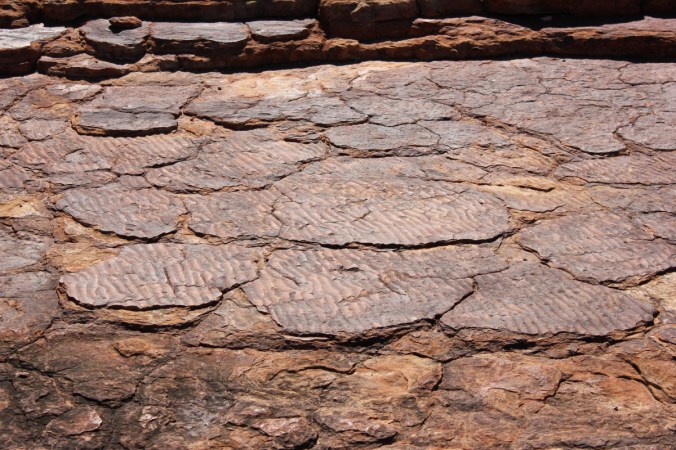
 Above we are looking out towards the car park and yes, the views are quite beautiful.
 Yes you are correct, those are people on the opposite side of the canyon looking over the edge! No fences here! Scary!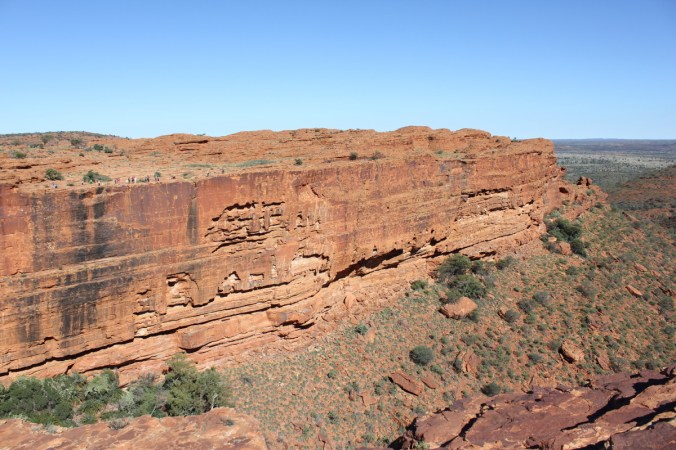
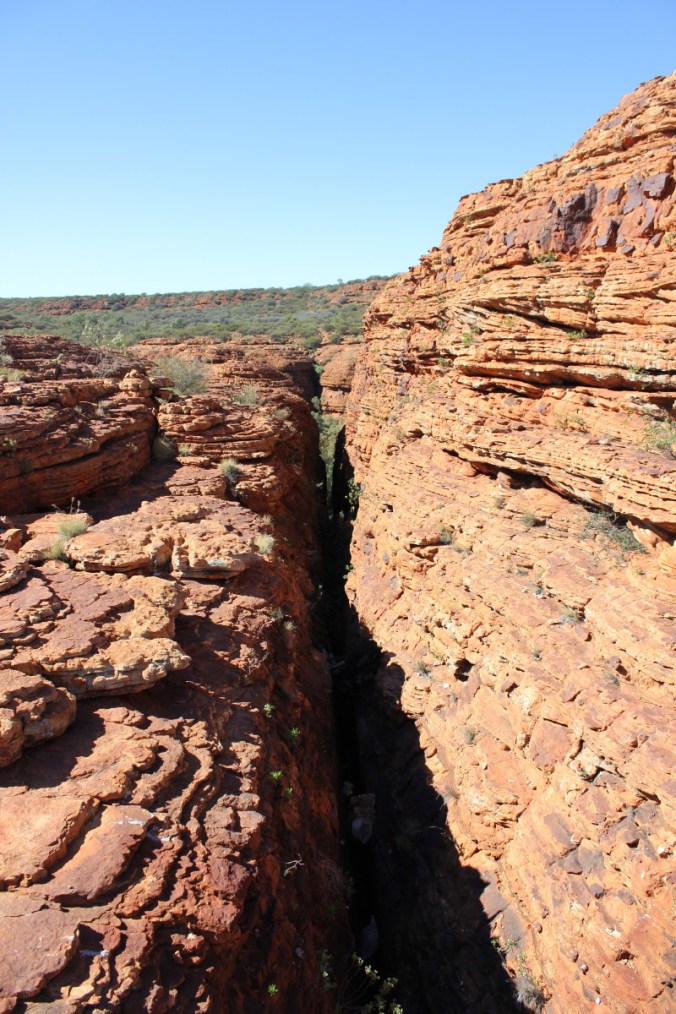
 Not a great photo below but just showing a chasm(Joint) and the cross bedding(layers) in the sandstone.
  Lets have a look at a few of the plants up here. The Desert Heath Myrtle, Thryptomene maisonneuve were in full flower. These Thryptomenes are widespread throughout arid Australia and can grow to 1.5m high.
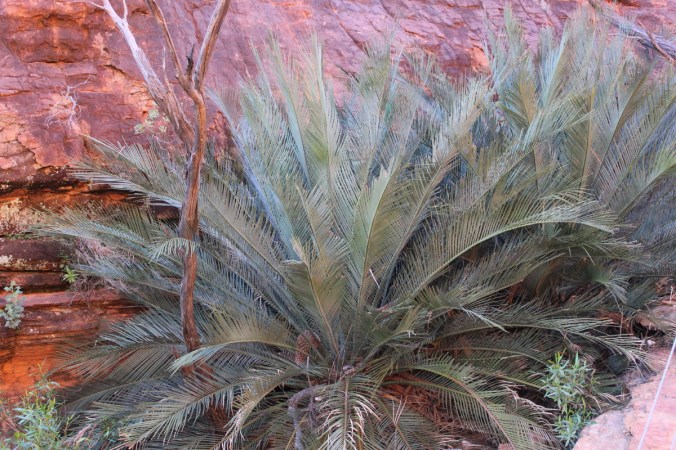
The ones on top of Kings Canyon in the open were quite close to the ground to get out of the wind!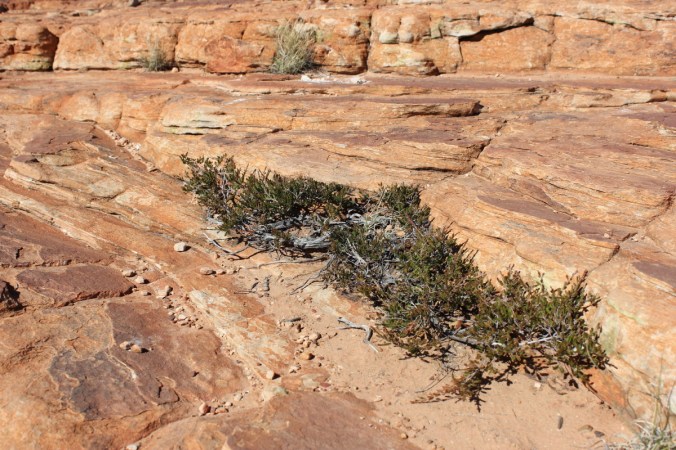 Below is Macrozamia macdonnellii, The Macdonnell Ranges Cycad, interesting to see cycads out in arid country!
 This one below looks like some kind of Hibbertia sp. Also know as Guinea Flowers, pretty nether the less.
 Not sure of this one, obviously situated in the Daisy family, could be a Calotis or a Minuria or some form of Brachycome or I could be totally off the money. Nice flowers though!
 This is Pandorea doratoxylon which we saw at Serpentine Gorge .
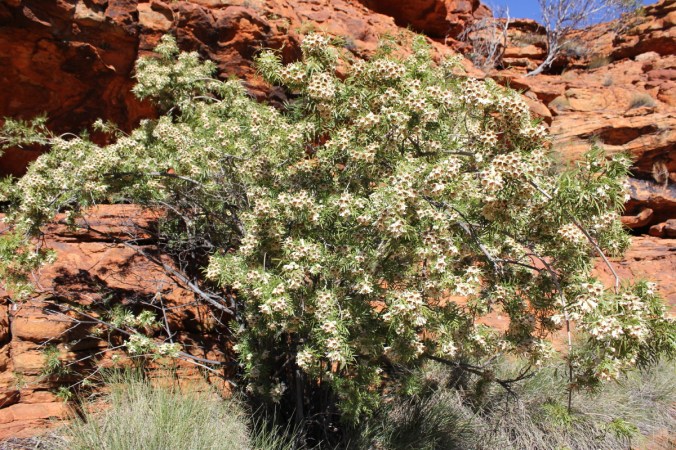 This is the stunning Holly Leaf Grevillea, Grevillea wickhamii.
 A shrub or small tree 1-4m or even 8m tall in places, seen in Western Australia and inland Northern Territory.
 We’ll leave the plants alone for a little while and head back into the scenic elements of Kings Canyon.
 Below we are looking into the Garden of Eden, an oasis in the middle of Kings Canyon fed via Kings Creek which creates a sublime environment in the heart of this arid country.
 Look at the reflection in the water, beautiful!
 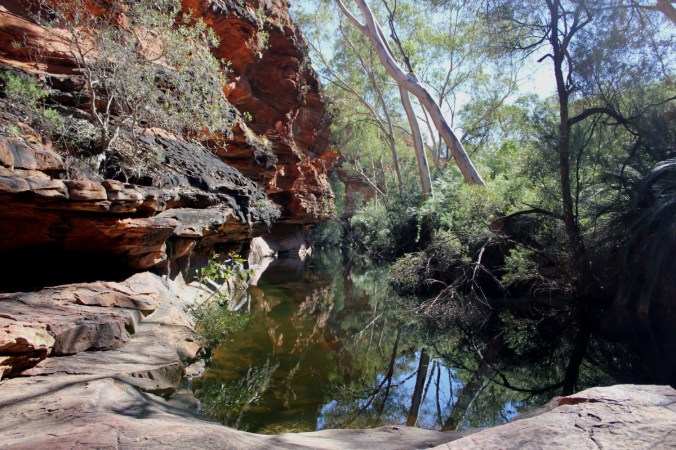 Here is a stand of the Macdonnell Ranges Cycads.

 Check out these reflections! Not Bad!
 The one below is actually taken looking directly into the water!
 Staircase leading out of the Garden of Eden and on towards the rest of the Rim Walk.
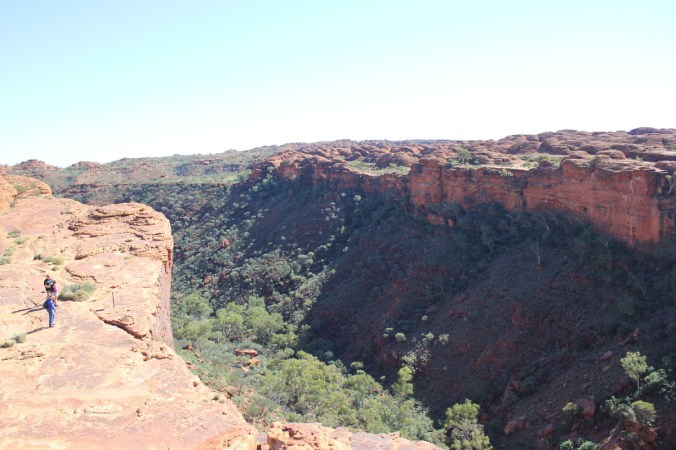
 Here we are around the other side of the rim. That edge to the right of those people is a straight drop of about 100m or more and then maybe double that to Kings creek at the bottom, scary stuff!
 On this Sandstone cliff you can see the horizontal layers that have been laid down over time.
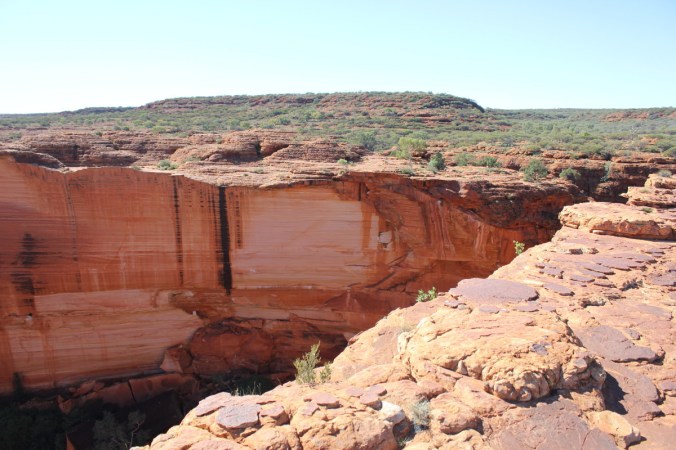 Wow!
Wow!

 A bit more information above and no we didn’t smash any rocks to check the insides!
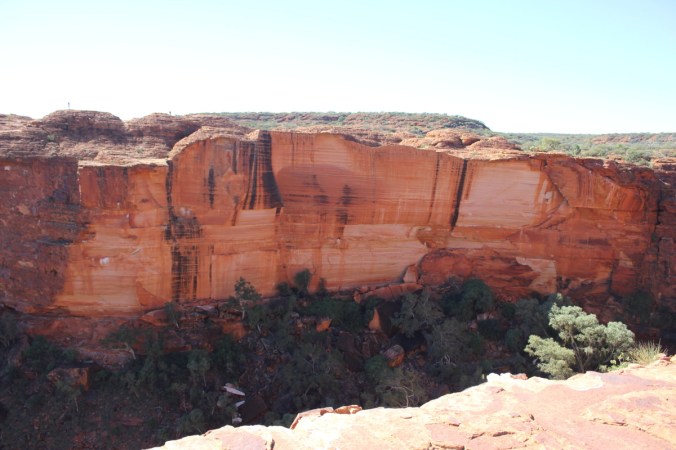 The colours were truly amazing!
The photos below show to good effect the Sandstone domes and layers
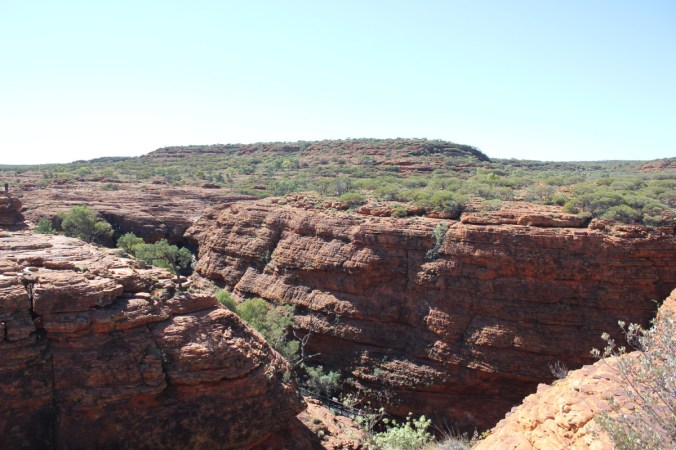

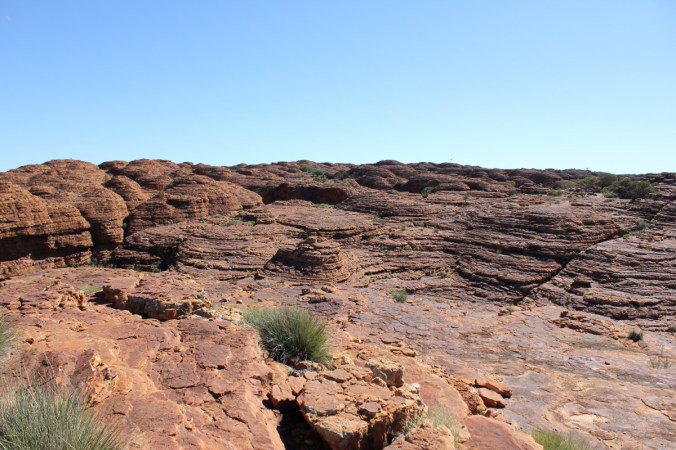
 I like this one above, it shows a couple of fault lines running in different directions. We are now on our way back towards ground level and the finish of the Rim Walk, a few more plants have caught my eye! I think this one is either a Goodenia, Lechenaultia or Velleia sp. Pretty little shrub on the sandstone hills on top of the canyon.
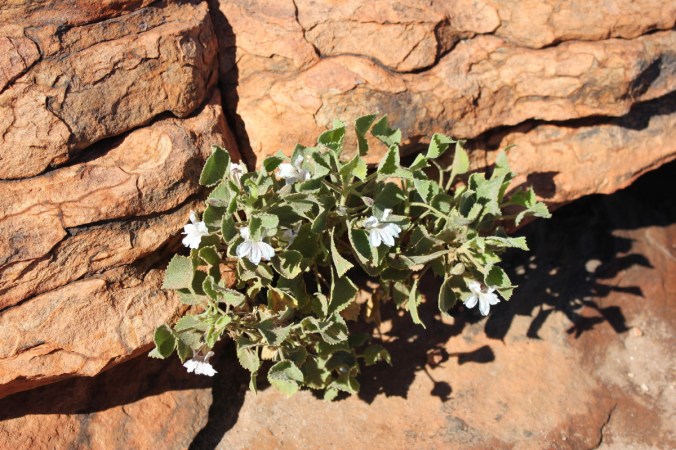 This one below is quite possibly Goodenia cycloptera.
 Plants have an amazing knack of growing anywhere, have a look at this fig below.
 This one below looks like a bit of an oddity and haven’t been able to work it out yet!
 A few more pics of Ptilotus exaltatus.

 Here’s a good photo of one we’ve seen before, Solanum quadriloculatum.
 This is Kestrel Falls, apparently where lots of Kestrel’s roost and also some good waterfalls here during the wet season.
 A few more plant photos showing the tough environment here.


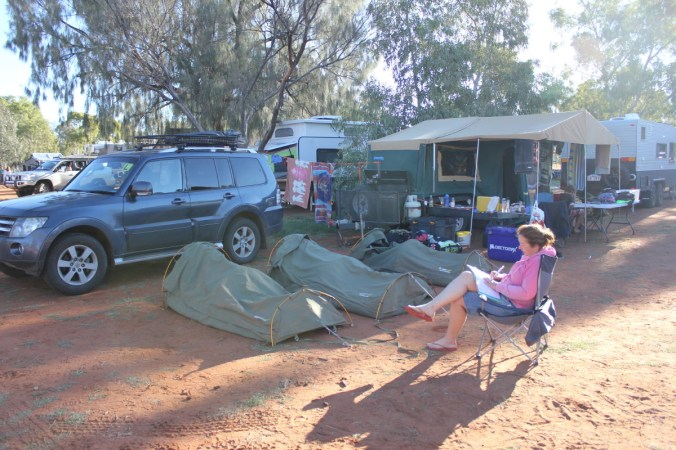
Well I must admit that’s about it. It was a big day and everyone enjoyed it even though we were tired!
 It was good to sit down again!
 Cheers!
 Layers upon layers of different coloured rock, it was quite stunning and one could imagine the shifts in colour during the day and the seasons.
 Above is some plant trying to cling on in a very harsh environment. Some views below of the creek bed that runs through here.


 The colours were even evident in the creek bed, see below.
 Here we can see where it has been mined.
 Another colourful photo! Or two or three!

 There’s no point stopping somewhere without checking out the plant life!
 Back in the Pajero and another 17 km’s and we have now arrived at Ormiston Gorge. We had hoped to camp here but the small camp ground was chock-a-block and the sun was on the way down, so we knew we had limited time here which was a shame. Another beautiful Gorge here in the West Macdonnell Ranges on a similar vein to Serpentine Gorge but quite possibly even prettier!
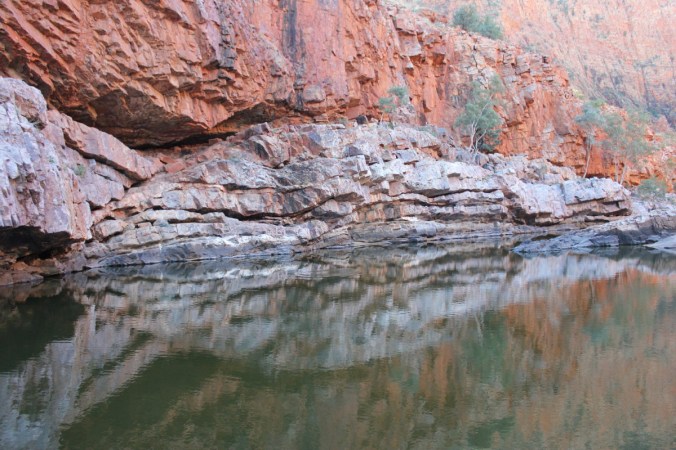
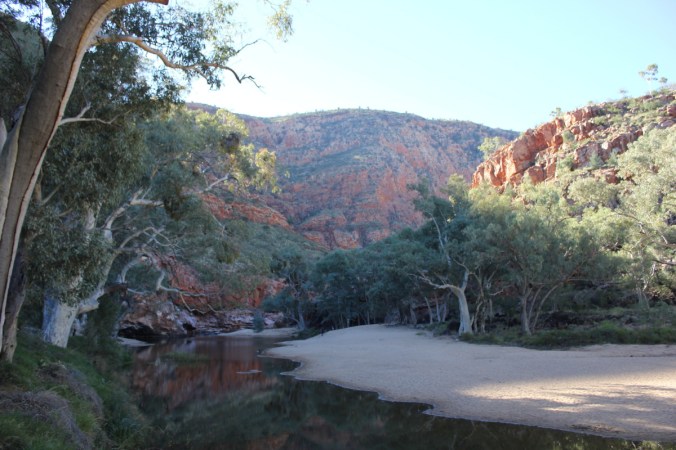 Perfect spot for a swim during the heat of the day, alas it was winter time! Some intriguing rock colour and formations below.

 Of course the plant life here took up some of my time, below is the Long Leafed Corkwood, Hakea suberea , quite common in dry desert regions. This is a large shrub or small tree 3-8m in height with dark brown cork like bark. Beautiful flowers produced in winter-spring, 4-15cm in length.
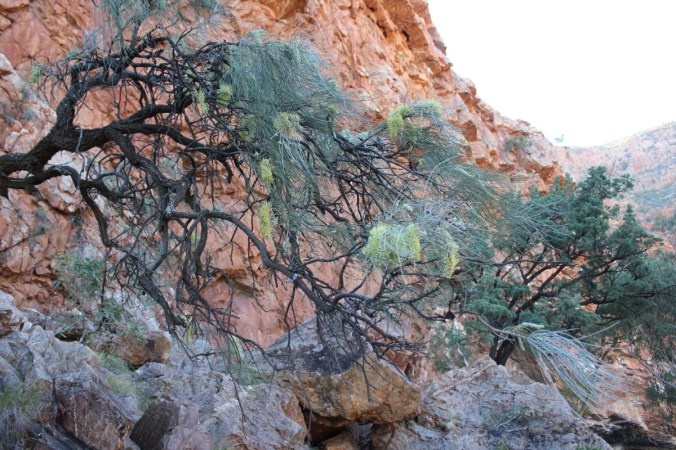 See above the contorted and gnarly branches and the beautiful flowers below.
 Another interesting plant was Wahlenbergia communis , the Tufted Blue Bell growing to 75cm on alluvial plains and intermittent watercourses plus run off area’s, often found in sandy soils as well. A wide-spread perennial in all mainland states.
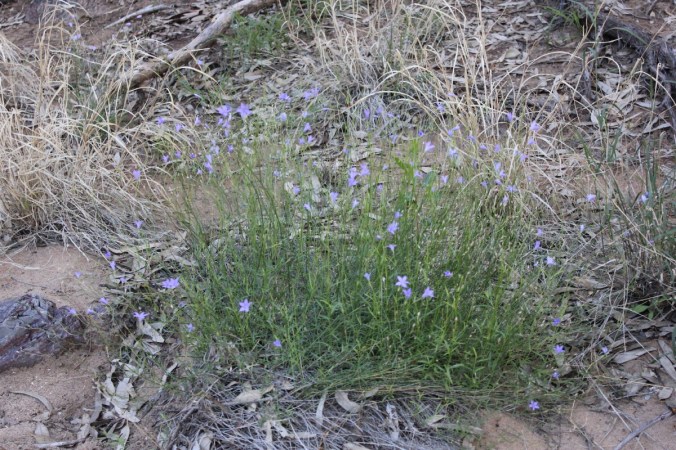 Not a great photo below but a close-up nether the less.
 Here’s some more rugged cliffs.

 Did you notice the gum tree’s growing on the sides of these cliffs, not many but a few hanging on for dear life!
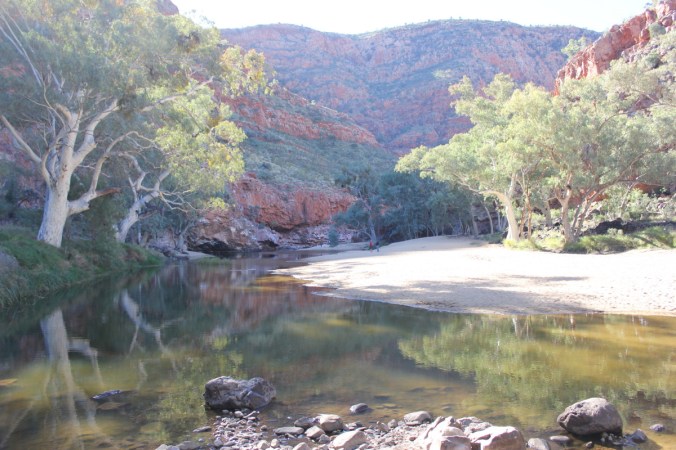 Or even these views…


 Below is looking across the valley
 Time to get set up before the sun disappears!
 Swags, fire and Tea!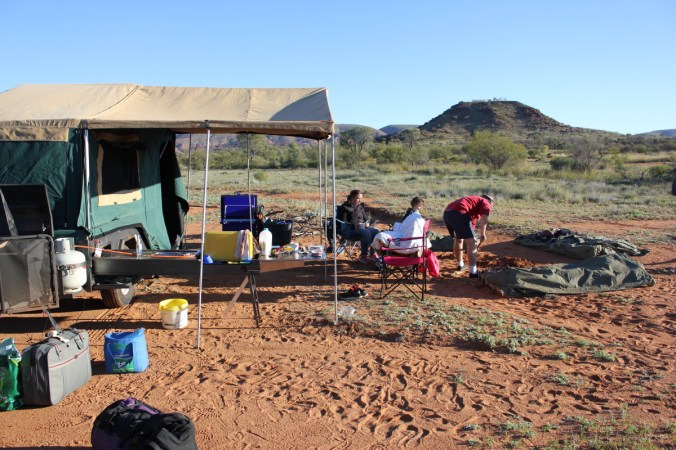
 Now for a bit of exploring! That means plant hunting really!


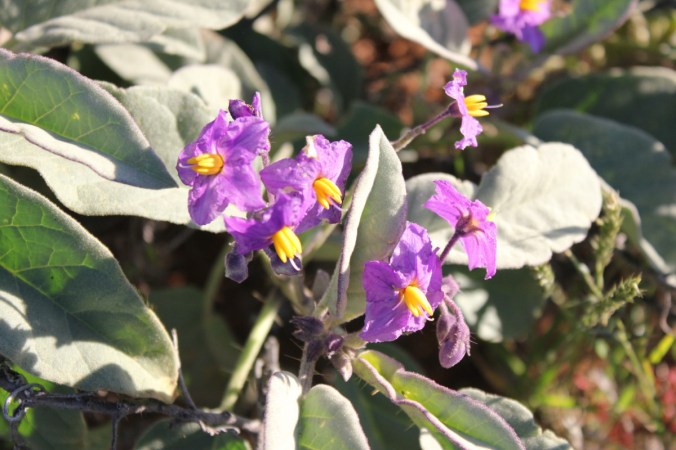
 Plus a couple of close-ups of the flowers, sort of!

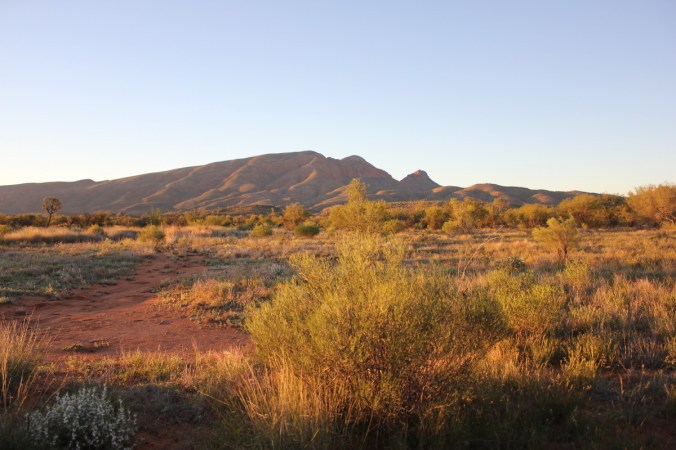
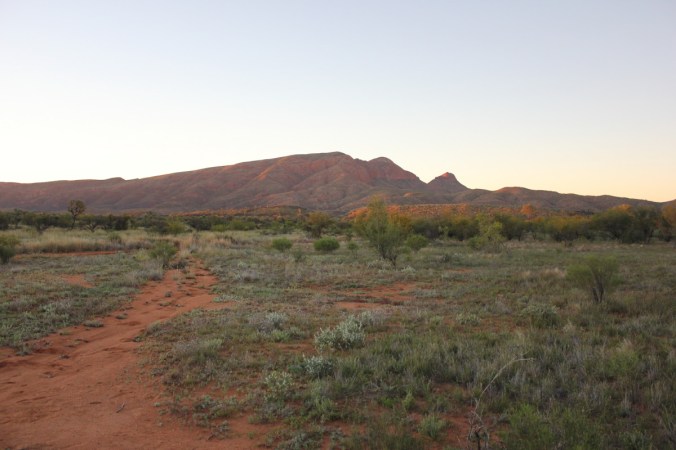

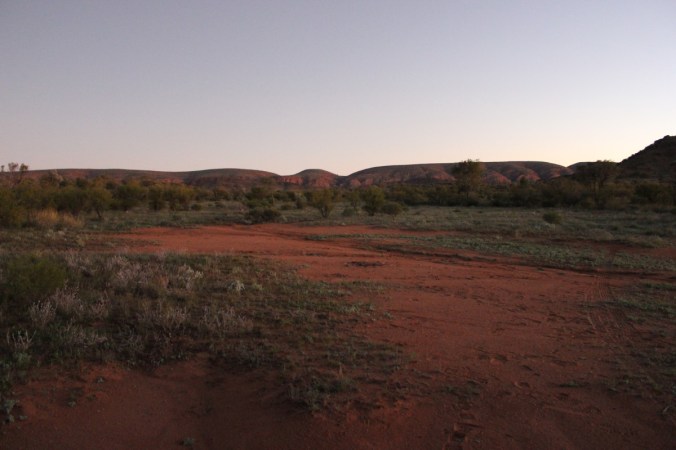


 This is what a lot of the surrounding plant scape looks like, uninspiring you may say but you just need to look closely to find its beauty.
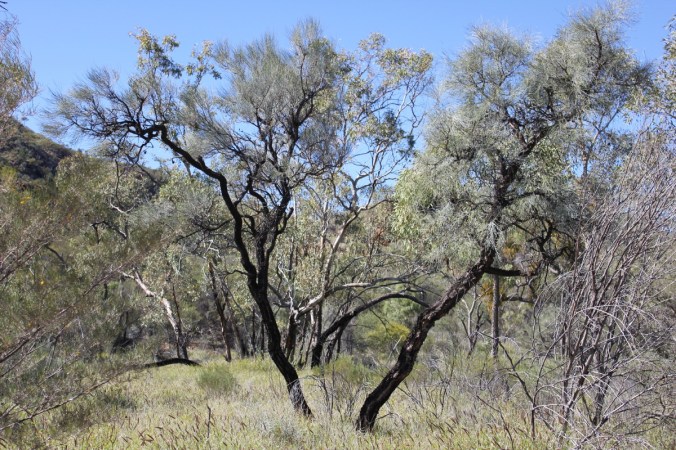 Larapinta trail marker, this walking trail is 223km in length across the Macdonnell ranges, click on this
 Remember! Don’t just look ahead, cast your eye’s down and to the sides of where you’re walking, you’ll never know what you will find or see next.

 Below is Senna artemisoides subsp. artemisoides, another mouthful but a very beautiful shrub which grows to about 1-2 metres with beautiful yellow buttercup flowers in winter and spring.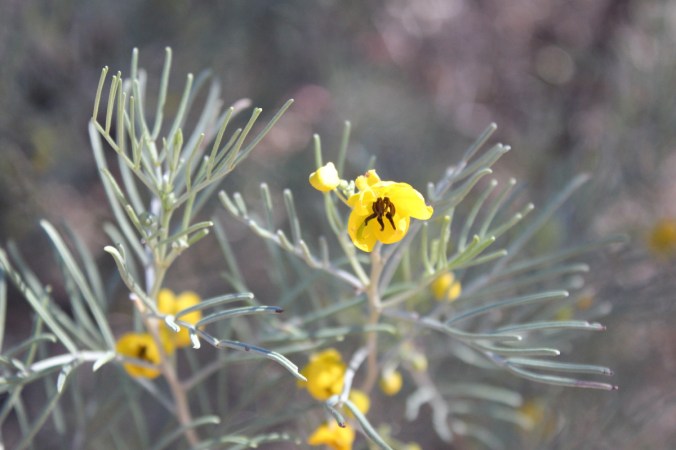
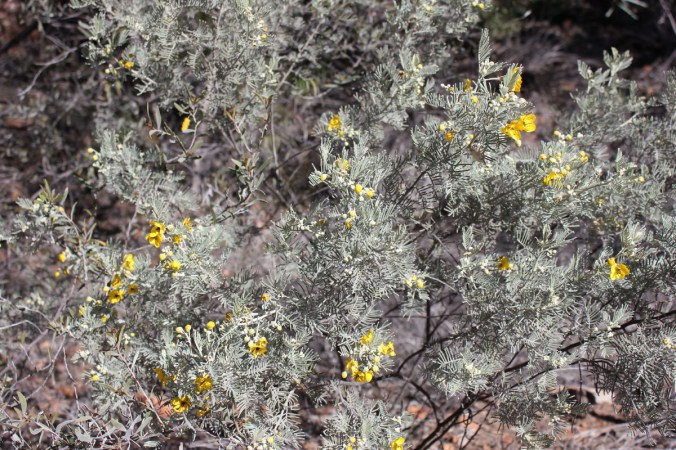 Maybe you can just call it the Silver Cassia. Now for an Emu Bush. Eremophila latrobei , commonly known as the Crimson Turkeybush, click
 Another stunning Emu bush is Eremophila longifolia , also known as Berrigan, tall shrub to small tree weeping in form, click
  Sorry, I got distracted with the plants in the Serpentine Gorge, lets move onto the scenery. This is the first sort of glimpse of the gorge and it looks like its sort of straight up to the top, hmm!
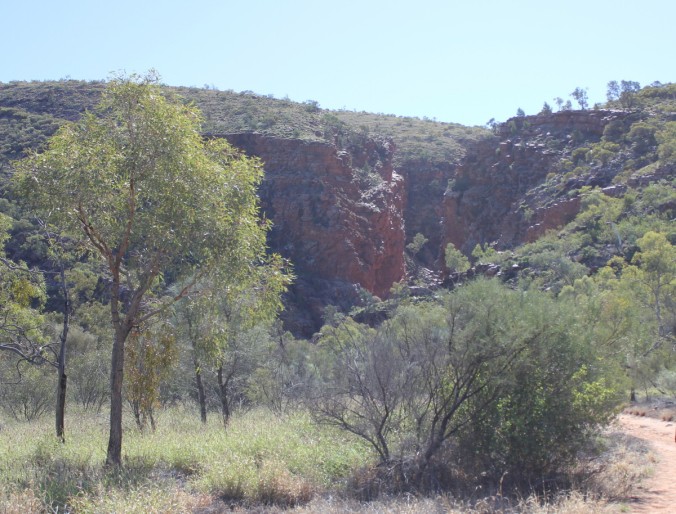 Lets go for it! Now we are starting the climb up and here you can clearly see the parallel ridge lines that run through the Macdonnell Ranges.
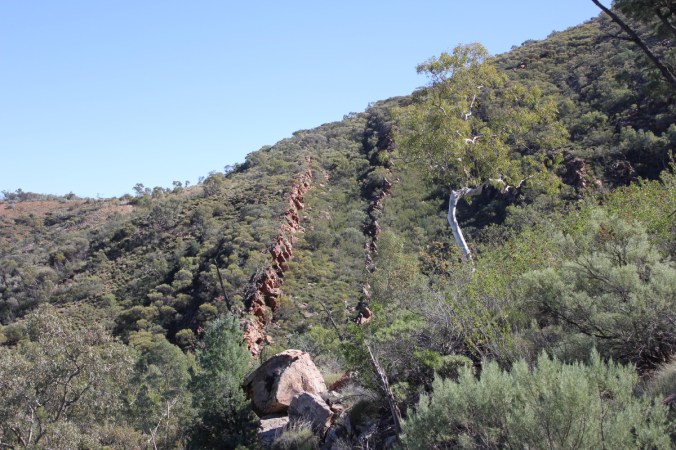 Another couple of views of those ridge lines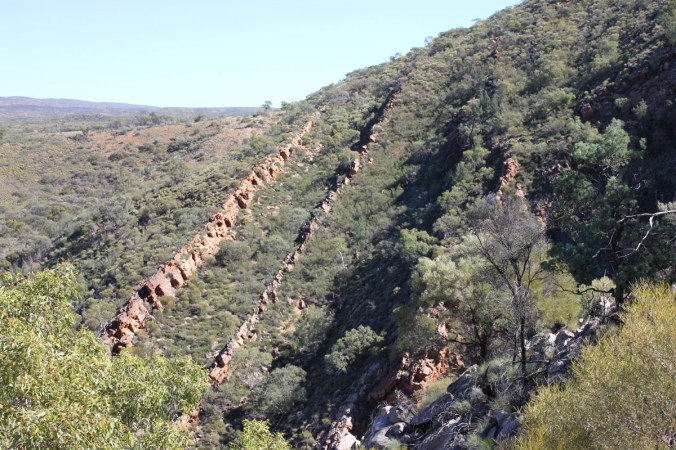
 Yes, as you can see above we are getting higher, quite spectacular! It is quite a rocky landscape and on these hillsides there is a lot of Porcupine grass, Trioda irritans. The last past of its botanic name sums it up very well indeed, very irritating because it’s quite prickly.
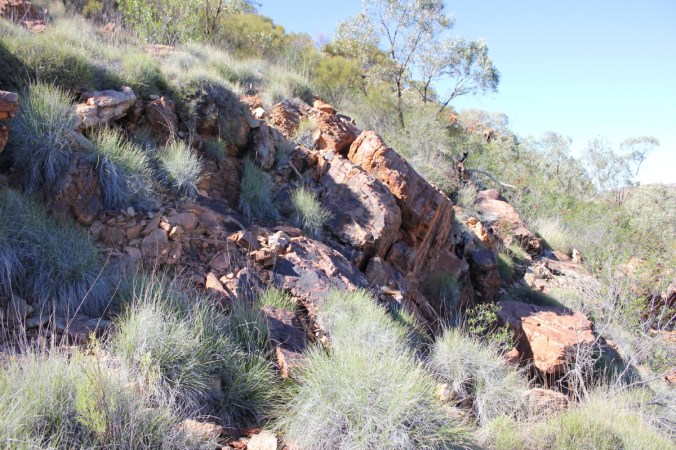 Below are more views across the valley.
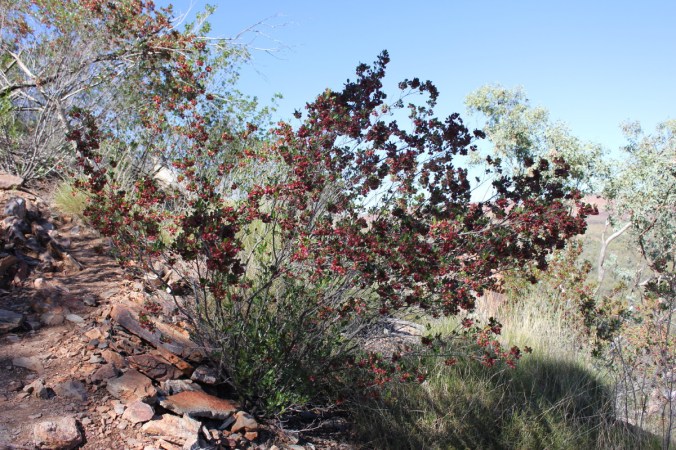
 Another plant of interest for me to see in the wild was Dodonaea viscosa , the Broad leaf Hop Bush or just plain Hop Bush, very common in gardens around the country and useful for many things from hedging to specimen plantings. It’s a very variable plant in the wild and widespread across the country.
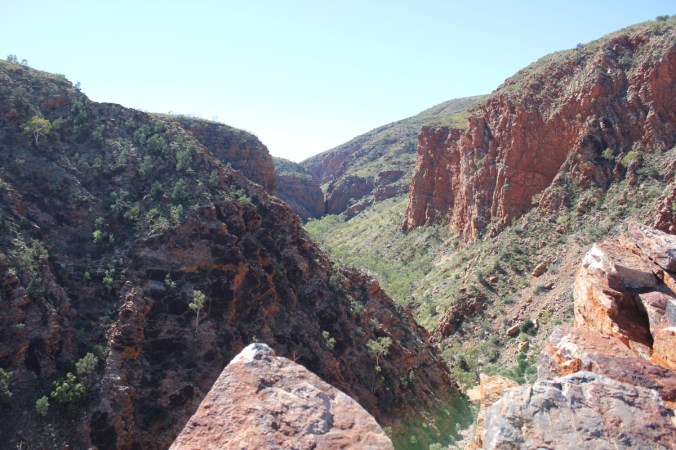
 Now I know photos are great but there’s just no comparison to actually being there and seeing this landscape. I have a great digital SLR camera but it doesn’t capture the WOW! The size, scope and detail of what your eyes are looking at or what your feeling right then and there as you look at this amazing country. Below is the Serpentine Gorge.

 Where does one go now from these heights? Down one would expect and lo and behold something I missed on the way up nearly hit me fair and square in the head on the way down.
 Leaning over the rocky pathway was this intriguing large shrub with what looked like stems twining around themselves like a climbing plant. This is Pandorea doratoxylon also known as the Spearwood Vine. The Aboriginal people use this plant for spears hence its common name. The long twining stems are light weight and are straightened and hardened over a fire. The flowers are quite pretty when one comes upon them in such a tough landscape.
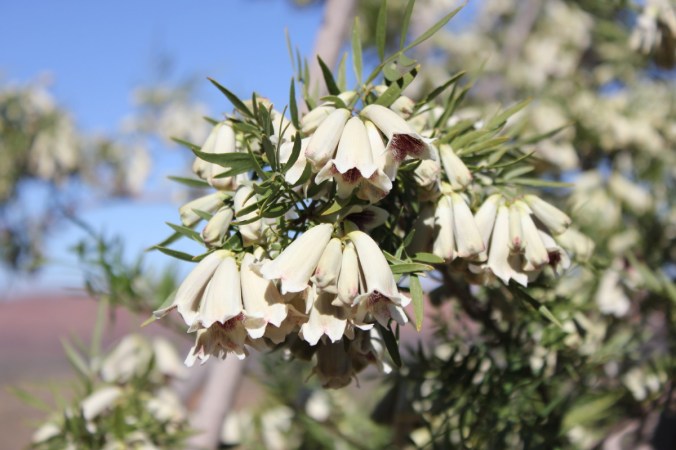 If they look familiar to you, you may be thinking of Pandorea jasminoides the Wonga Wonga vine or also known as the Bower Vine or one of the many hybrids available today. You would be correct because they are in the same family Bignoniaceae. Check out this closeup below!
 This next photo doesn’t show too much, I just liked the detail of the bark. To me it tells a story of the harsh landscape in which it resides.
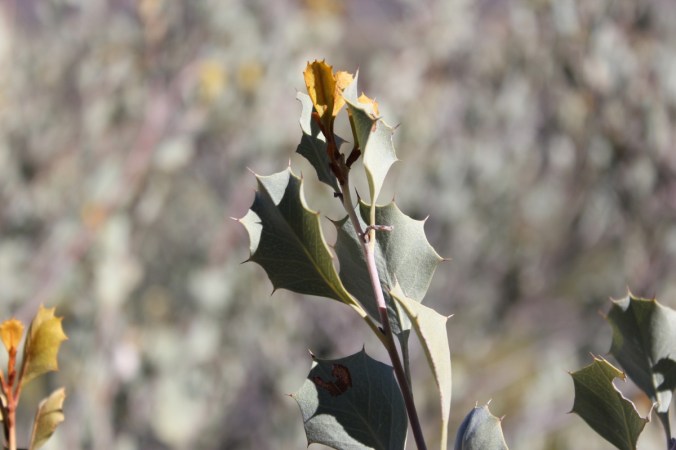
 These next photos show an interesting Grevillea, the Holly Leaf Grevillea, Grevillea wickhamii. There are a few sub species but I’m not sure which one this is. I have pictures of this flowering at a different location which will be revealed at a later date!
 You can see above that the new growth gives the plant a tinge of yellow which from a distance look like flowers.
 Some more plants of interest here included another beautiful Emu Bush, Eremophila freelingii. The Rock Fuchsia Bush.
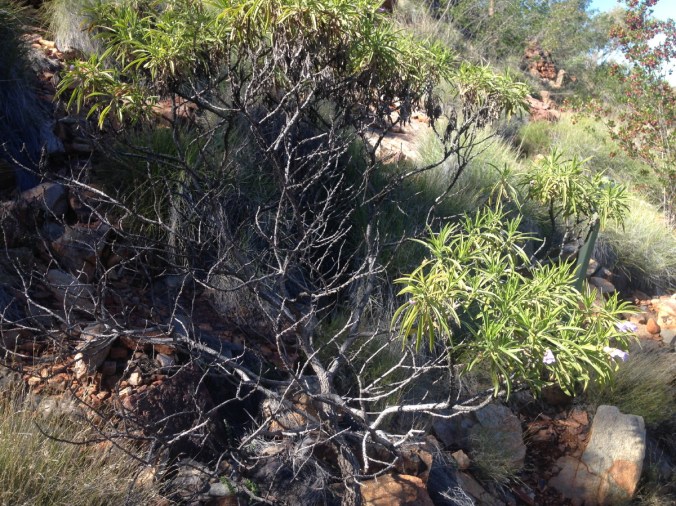 A characteristic of this plant is that it sheds its lower leaves during drought to conserve moisture, you can see that quite clearly in the above photo, the plant looks half dead but it’s not! Grows to about 1.5 metres. The lilac flowers are stunning and are produced after it rains. Just a few more views below of this beautiful plant on the sides of Serpentine Gorge.

 Funnily enough another surprise was what looked to be some type of Fern here as well and yes it was. Not sure of its identity but quite possibly Cheilanthes brownie , The Northern Rock Fern, either way still remarkable to me to see a fern out here. Nature is amazing.
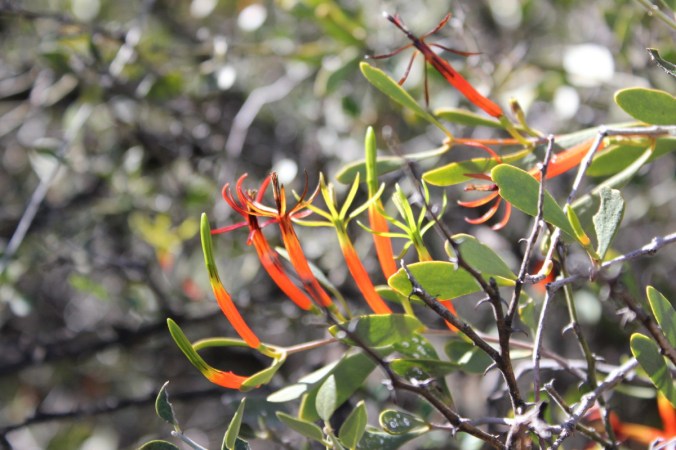
 Another interesting plant we saw was a parasite. Lysiana exocarpi , the Harlequin Mistletoe. This parasite is found mostly in inland locations and is very colourful.
 Now we have made it back down and headed into the cool of the gorge, being winter it wasn’t hot out in the open so one could imagine how nice and cool it would be in the heat of summer.
 In the above photo in the distance you can see some cycads, Macrozamia macdonnellii , the Macdonnell Ranges Cycad. Here they are below as well.
 Ah well! That’s about it for the Serpentine Gorge, here’s a few last photos of plants and foliage.


 Finally a last look into the gorge.
 Cheers!
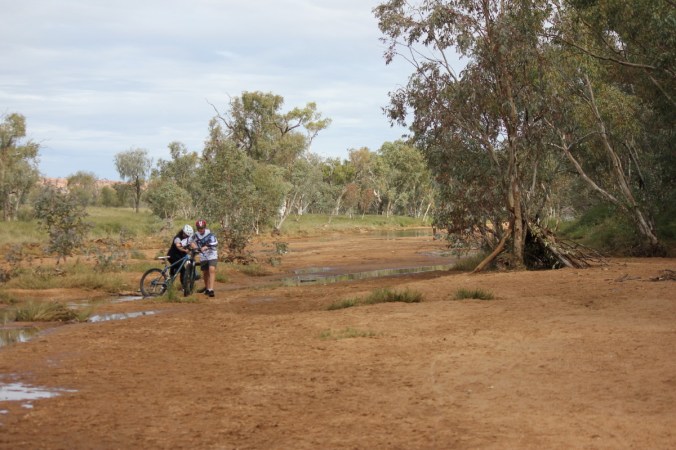
 Yes it is empty, this is only some puddles that are not moving.
 Some of the kids having a ball in the puddles.

 Here’s the dingo stalking a galah…..

 Missed it.. ah well, there’s always next time.





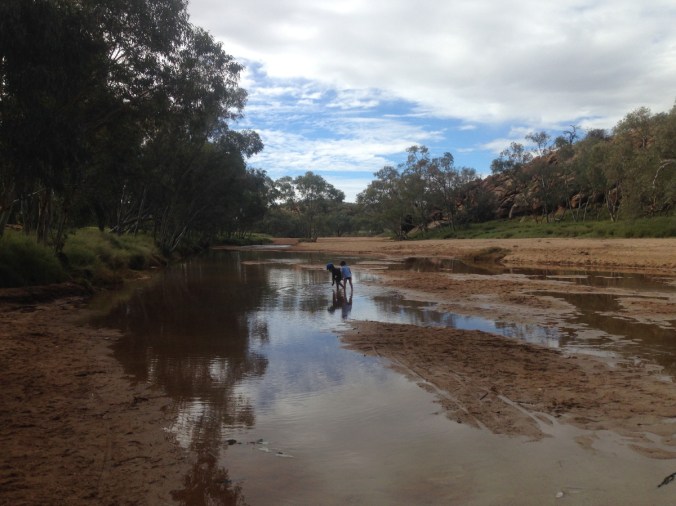


 Well maybe just a smidgen of water. The parting shot of Alice Springs for this post is from Anzac Hill. A memorial to the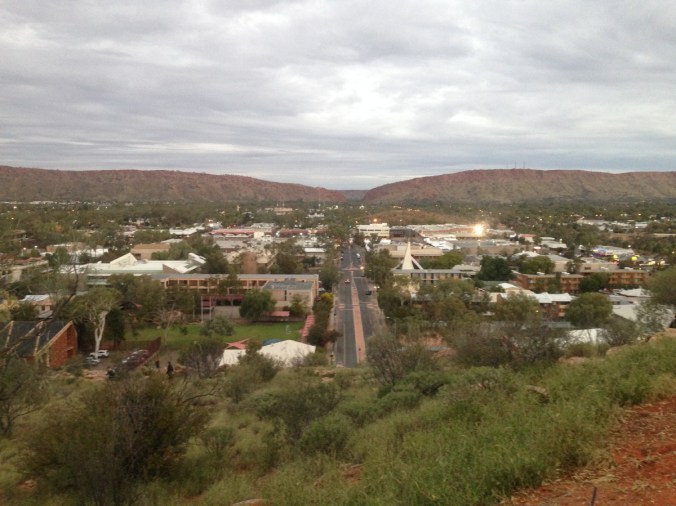

 Thanks “ALICE” it was a blast!!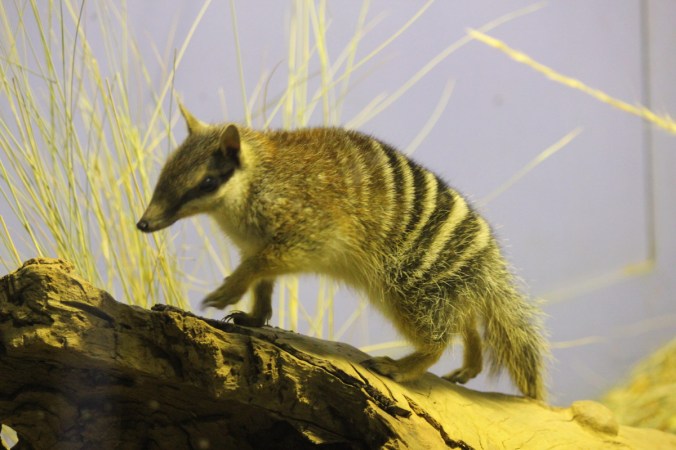
 Of course there were all sorts of snakes and lizards, sorry about the blurry picture but I just had to include this nasty looking fellow!
 The Thorny devils are always great to watch, these fellows were standing there and eating the ants as they went past them. Their tongues would just flick out and snaffle them up.


 As you can see they are certainly thorny, also very well camouflaged for the desert environment. The Lizard below is just hanging out, I don’t know his name.
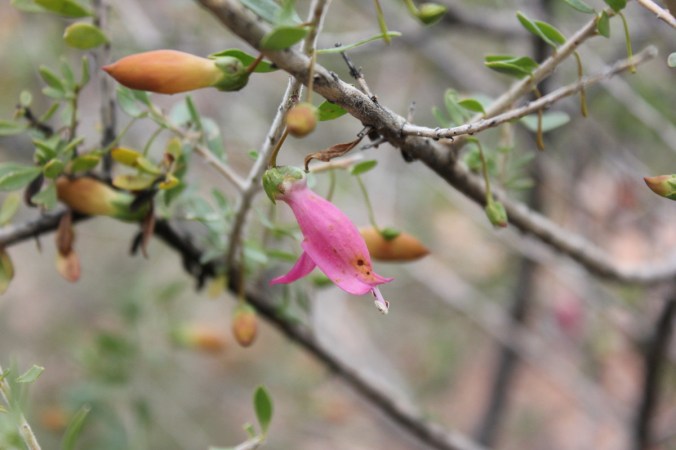
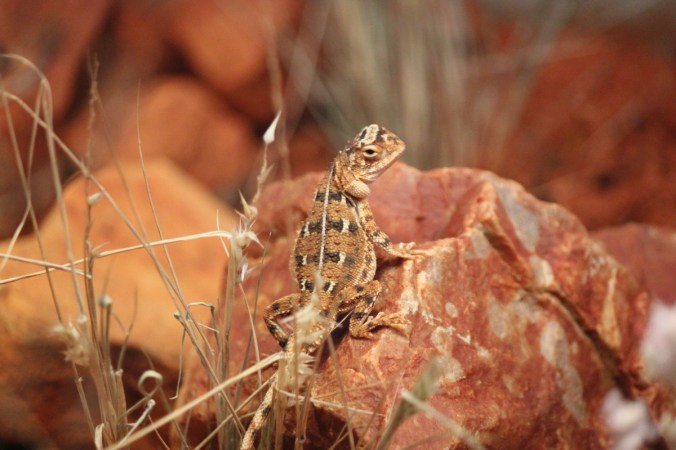 What I noticed a lot of in the park were lots of different Erimophila shrubs. There are about 260 Erimophila species endemic to Australia, also known as Emu Bushes. There are also many cultivars available in nurseries now. Here’s a few from the Desert Park.


 If I say Dingo, what is the first thing that pops into your mind? If you come from Australia like me, I would haphazard a guess that the name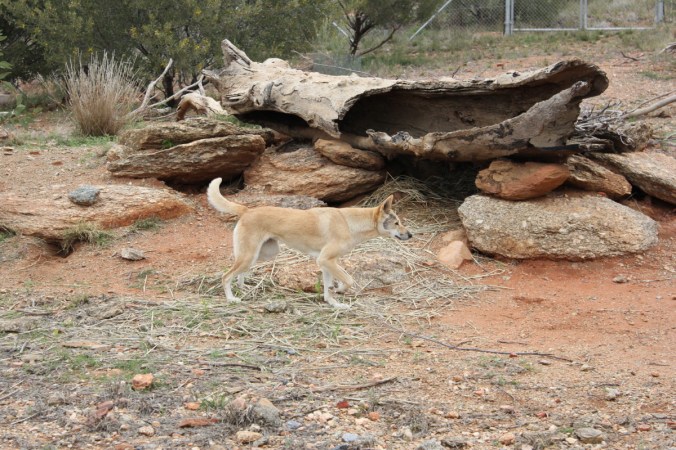
 They blend in quite beautifully with their surroundings as you can see. They also come with different coat colours depending on what habitat they live in. Interesting!
 Here’s another plant that’s prominent in the Alice Springs area Senna artemisiodes subsp. oligophylla, also known as Oval Leaf Cassia. A beautiful yellow flowering shrub to 2 metres.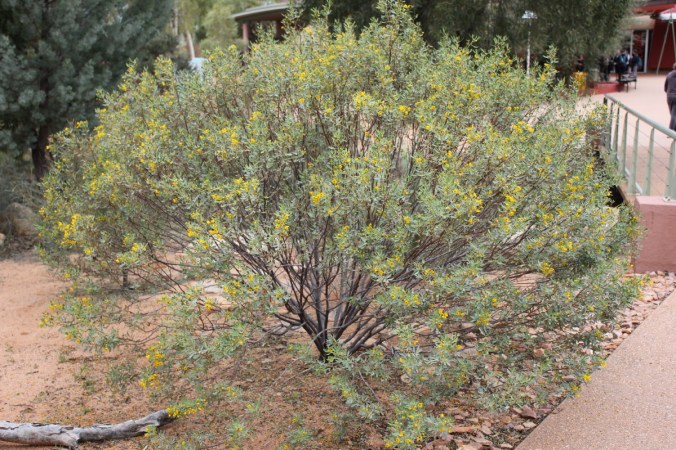

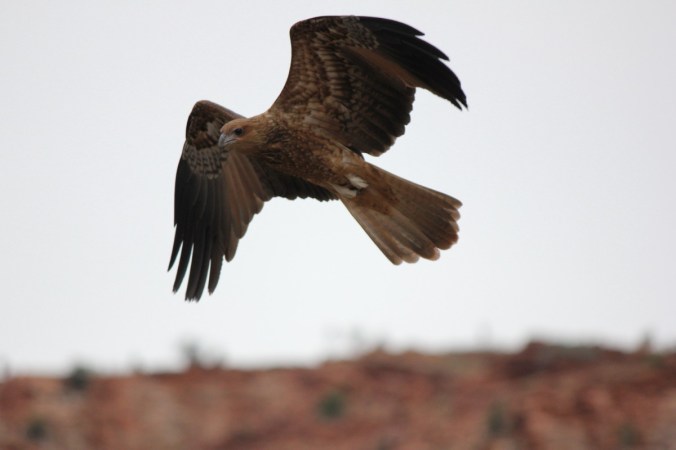
 Another very exciting exhibit at the Alice Springs Desert Park is the Birds of Prey demonstration. Keep your head low!! A couple of Kites put on quite a masterful aerial display.


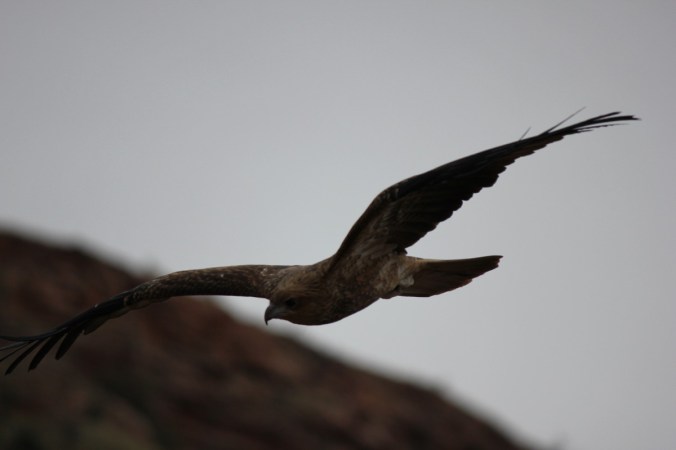


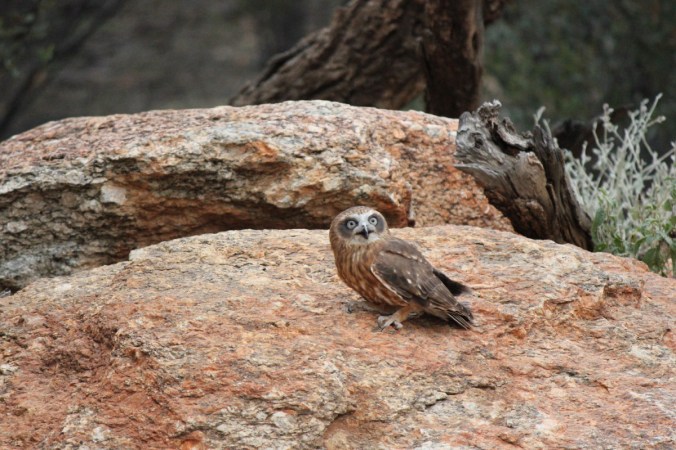


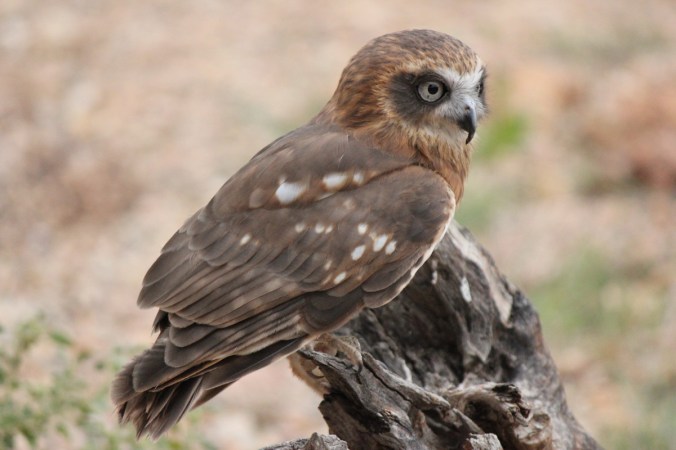 Of course the star of the show is the mighty Wedge Tail Eagle. These are quite widespread across the country and we see lots at home but still they are impressive wherever you see them.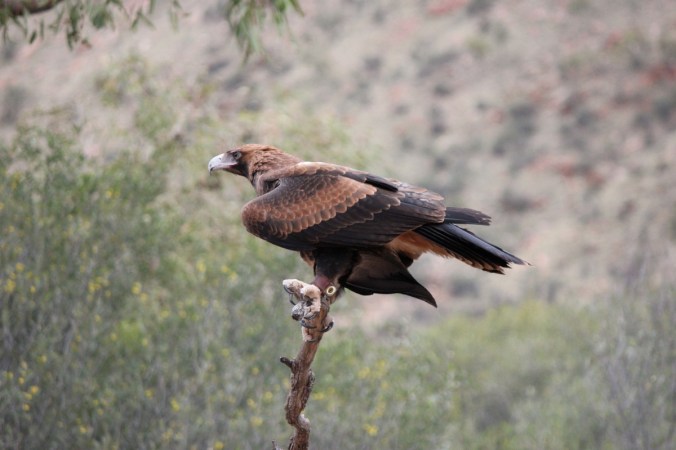
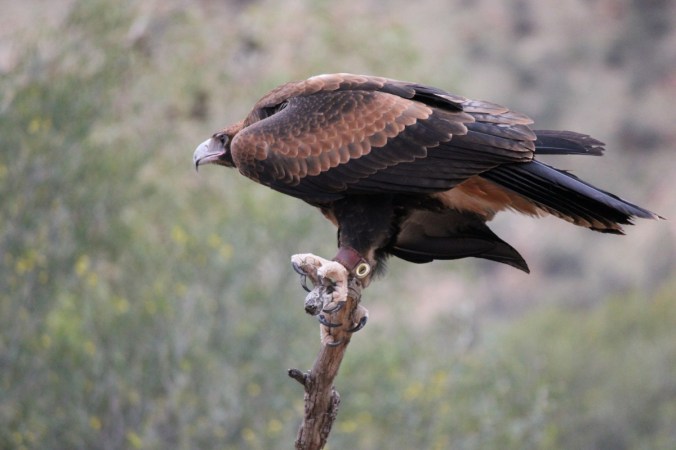

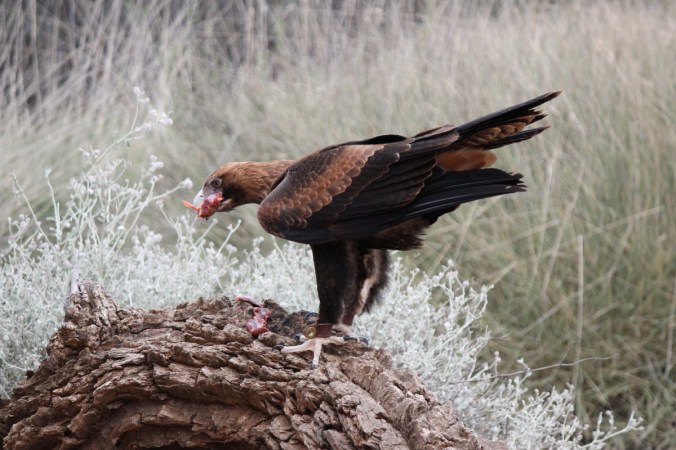 Check out his Wedgesticks(drumsticks) and not to mention his talons!

 And of course that big rudder at the back-wedge tail. Need to know more?? Click


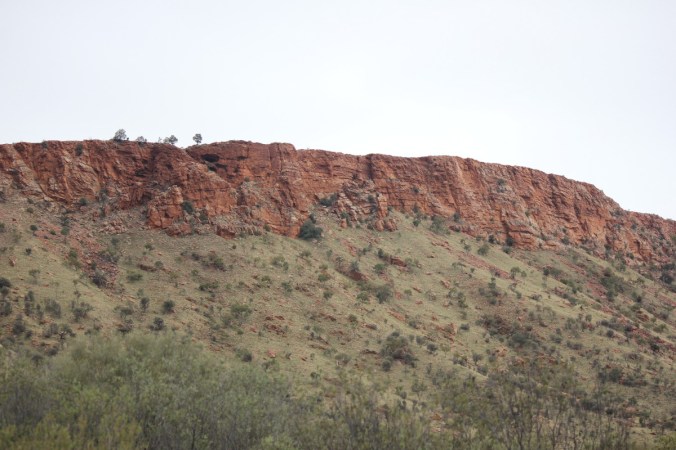
 Of course there are plenty of other animals here, this is only a snapshot of a few. I will finish with one of our most iconic marsupials, Big Red. Macropus rufus.
 Cheers!


 Above is the Olive Python, Liasis olivaceus. My goodness this fella was huge, lucky the glass didn’t just vanish hey! Adults can reach over 4 metres in length, the second largest snake species in Australia. Dinner also includes the below pictured, Rock Wallaby, Yum! That’s quite a mouthful….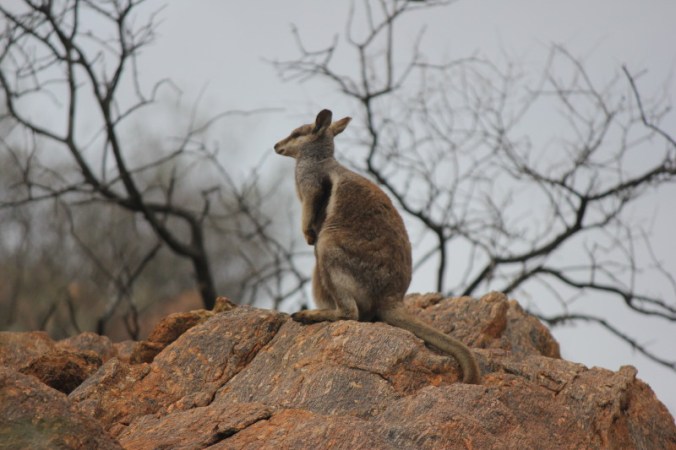

 Pogona vitticeps, aka the Central Bearded Dragon pictured below can grow up to 60cm in length with the tail accounting for approximately half of its length. Central Bearded Dragons can be seen with a range of different colours, browns, reddish-brown, red, white, orange and yellows.
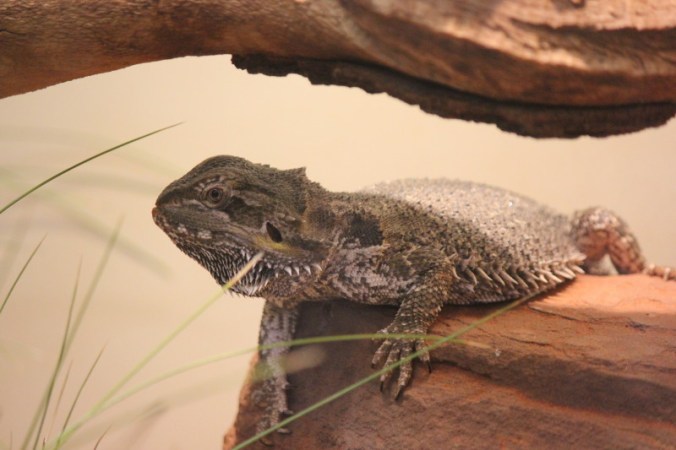 See his scary beard under his chin, used to intimidate would be tacklers! When threatened they flatten themselves, puff up their throats and open their jaws to look bigger and more fearsome. The photo below shows a different coloured Dragon, they change colour to regulate their temperature.
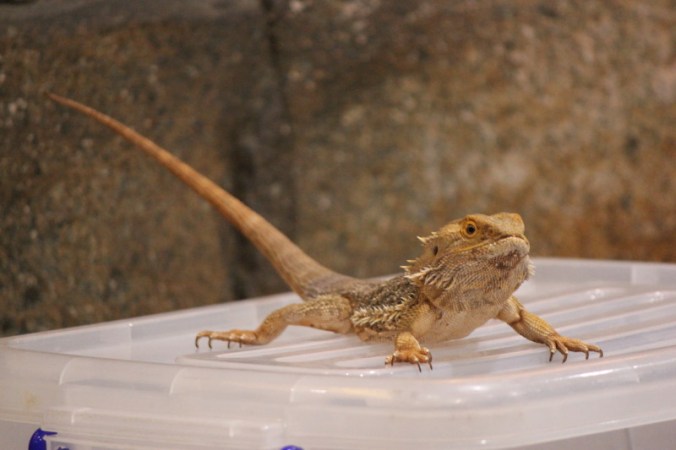 We were able to pass this fella around which was pretty cool! Quite soft to touch apart from his claws.
 Here is the Centralian Carpet Python, Morelia bredli growing to 2 metres and in captivity its known to get to 3 metres or more. Don’t think we need to dwell on this anymore, moving right along!!
 Talking about Brown snakes, here’s the King Brown, Pseudechis australis. Another one to give a miss or go the long way around!!
 Luckily its a bit out of focus so it wont see you!! Here’s a few more animals from the Alice Springs Reptile Centre.


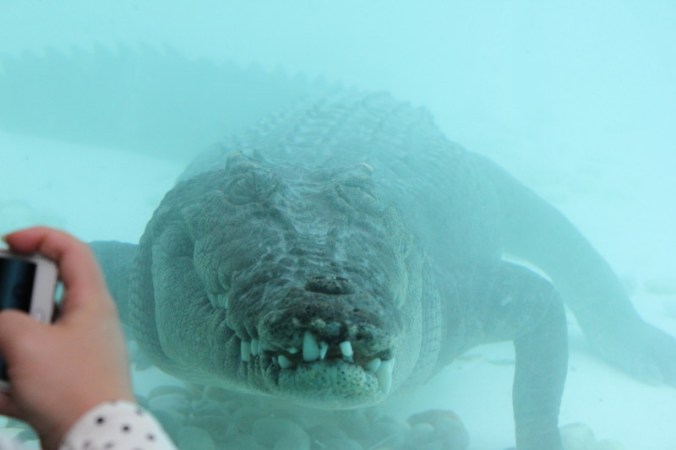 Never ever touch croc infested water, if you do you will be dead(most likely), vibration for them is like pollen to a honey bee. If you see their eyes break the water surface, you have just been triangulated, they know where you are. If you’re walking past croc infested waters – make sure you have a small dog with you. They are far more interested in small animals than they are in you. There is no such thing as a death roll, you are already dead, they are just trying to rip a piece of you off yourself because their hungry. They kill their prey by drowning them and it only takes a minute or so, no rolling required Their teeth are quite blunt and they tear pieces off, so that’s why you get rolled around. . See, not a death roll, more like a subway sub being prepared! So on that happy note, have a great day and look out for Terry!
 Fortunately there was still a lot of things to look at and enjoy, particularly new species that I had never heard of before and the setting was idyllic, peaceful and quite in the midst of a major city. I made my way to the top of Annie Myers Hill where there was a fantastic view over Alice springs and the surrounding area.


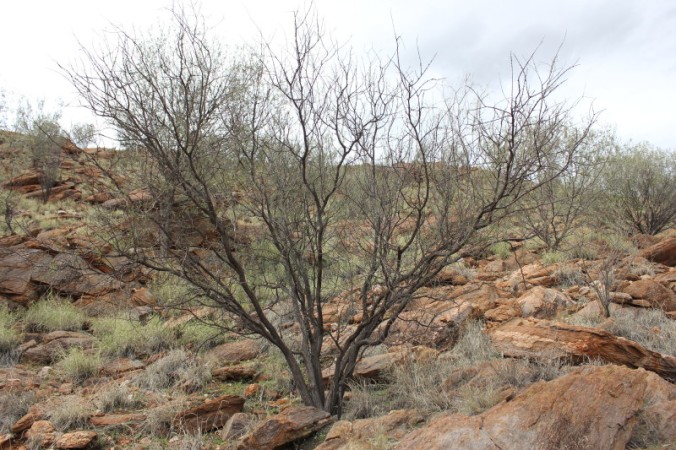 You can see it has quite a twiggy appearance which provides good habitat for birds. The above photo makes it look dead but it is missing quite a few leaves from the hail storm although the leaves are like needles. A tree I had never heard of before is pictured below, Atalaya hemiglauca , Whitewood. This tree grows to 7 metres and has creamy flowers in the warmer months of the year. Occurs across central and eastern inland regions. Would look good in a garden setting or Parkland.
 Aboriginal people harvest witchetty grubs from the roots of this tree. Soft timber used to make ornaments as well.
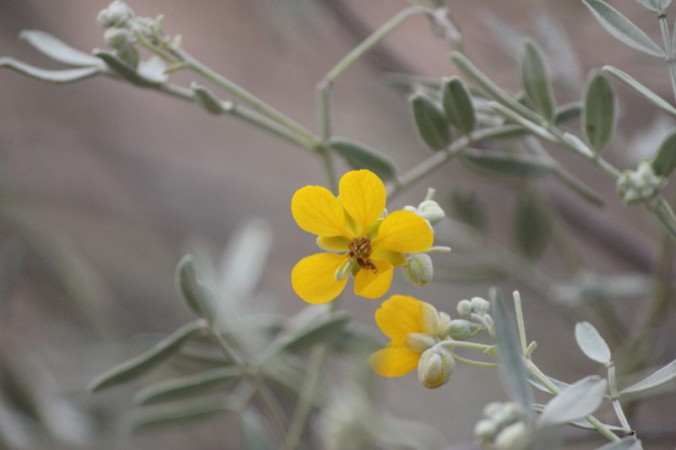 Above is Senna artemisiodes subsp. sturtii which is also known as Dense Cassia. This is a very attractive garden plant particularly while in full flower. Grows to about 2 metres. Saw plenty of Cassia’s Dense or Silver coming into flower. Certainly stand out even on roadsides. Here’s a few more different Wattles.
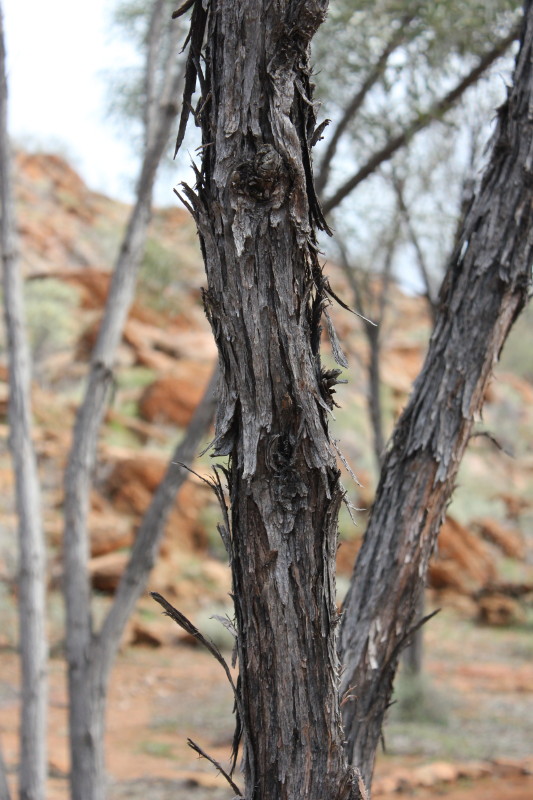 Acacia undoolyana , Undoolya Wattle has limited distribution in the East MacDonnell Ranges, grows to 15 metres and has a spectacular floral display in August. This plants status in the wild is Threatened due to hot summer wildfires and that it doesn’t set seed readily.
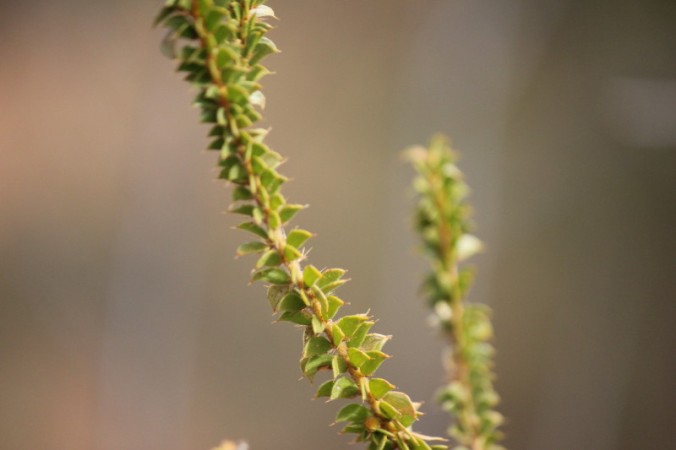 Acacia stipulosa with small interesting leaves. Below is Acacia kempeana , Witchetty Bush which is drought and fire tolerant. Witchetty grubs are harvested from the roots of this small tree. The Arrernte people also use the inner bark from the roots to make string.
 Below is a bizarre looking Wattle called Waddy Wood. Acacia peuce is a threatened species known from only three different populations on the edge of the Simpson Desert. Grows to about 17 metres with immature plants being very spiky compared to mature specimens which have pendulous branches. Used traditionally for clubs and by early European settlers for fences.
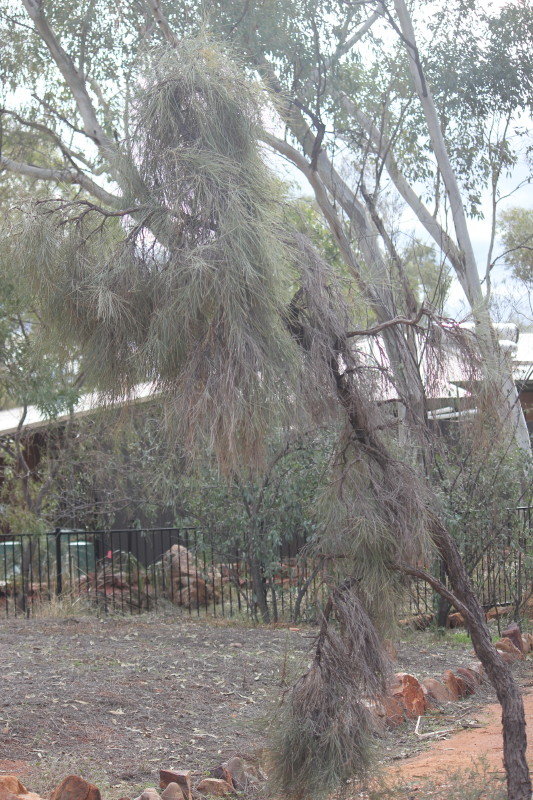 Acacia desmondii , Des Nelson Wattle is found in the Rodinga Range south of Alice Springs. Grows to 5 metres on sandstone ridge habitat.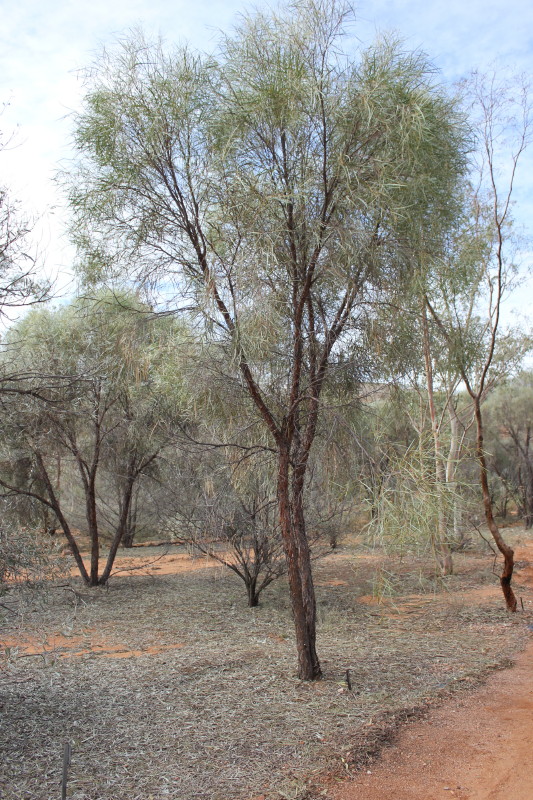
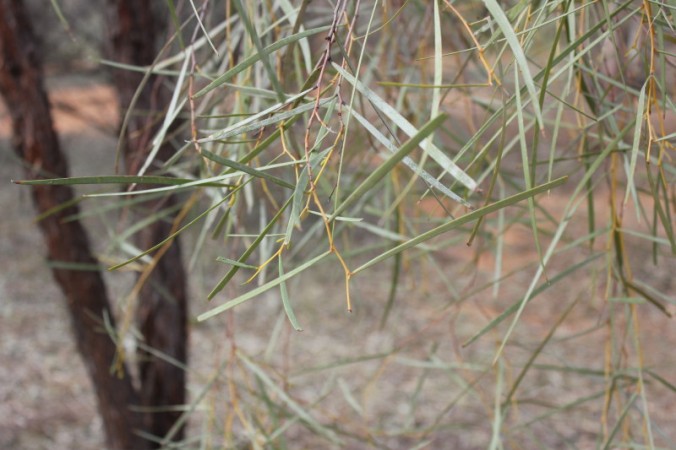

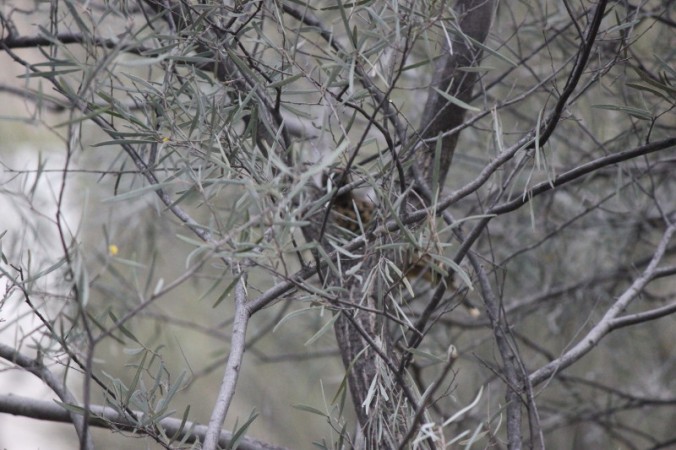 Seed from this plant is an important bush food throughout the region, it also produces Mulga Apples, a gall that forms around insect larvae which is consumed as well. The timber is widely used as firewood and traditionally for making shields, digging sticks and woomeras. There also 2 types of mistletoe that co habit this tree. Amyema maidenii and Amyena spathulata(you will see this in a later post).
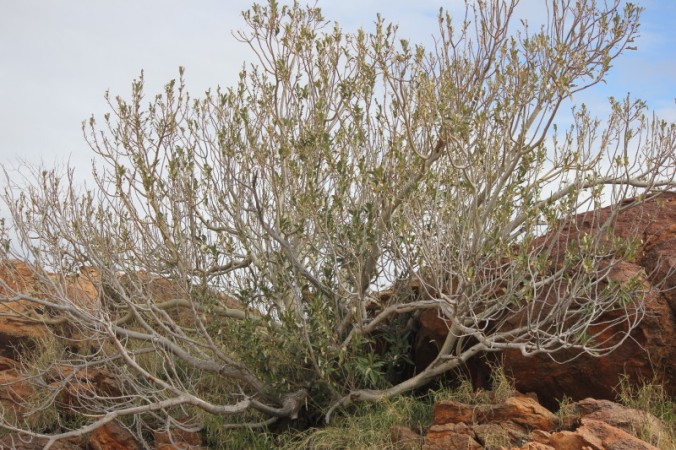
 Now for some Mallee’s. Mallee’s are multi stemmed tree’s from the genus’s Eucalyptus and Corymbia. There’s approximately 1000 different species of Eucalypts and Bloodwoods, don’t panic I’ll only show a couple!!
 Above is Eucalyptus sessilis the Finke River Mallee which occurs in the ranges south and west of Alice Springs. This Mallee has smooth bark and large leathery leaves on a small multi trunked tree. Flowers are creamy yellow. This Mallee has nice orangey/brown coloured trunks and branches, noticeable when the bark is peeling. Below we have Eucalyptus oximitra , the Sharp Capped Mallee.
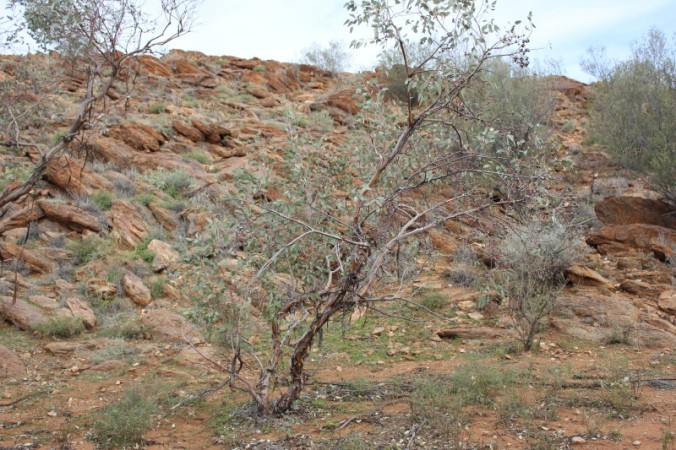 This Mallee grows to 6 metres with leathery leaves and large yellow flowers during the summer months. Can be found on sandy plains or rocky hills in arid parts of Australia, mostly S.A, N.T, and W.A. Below you can see its capsules.
 Last but not least of the Mallee’s is Eucalyptus gamophylla , the Blue Mallee which can be found in many arid parts of Australia. Growing to about 8 metres with blueish coloured leaves, juvenile leaves are round and creamy white flowers during summer. Found on rocky hills or red sand country. Seeds can be eaten and water can be found in the roots if desperate!
 What about Erythrina vespertilio another tree I had no idea about. The Bean Tree or Bats wing Coral tree has extremely light wood which was used for making shields and bowls.
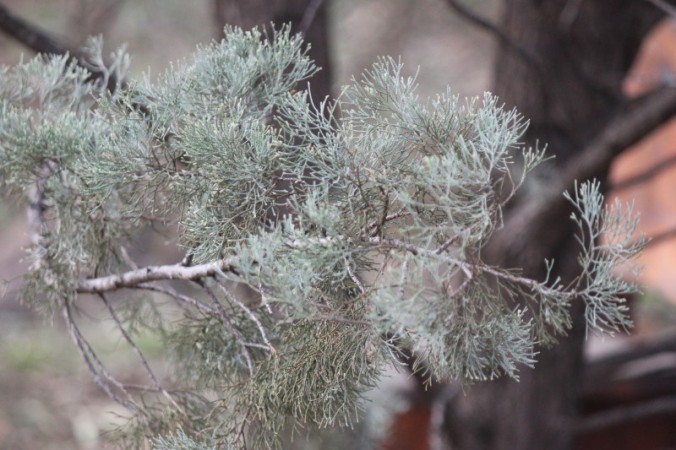
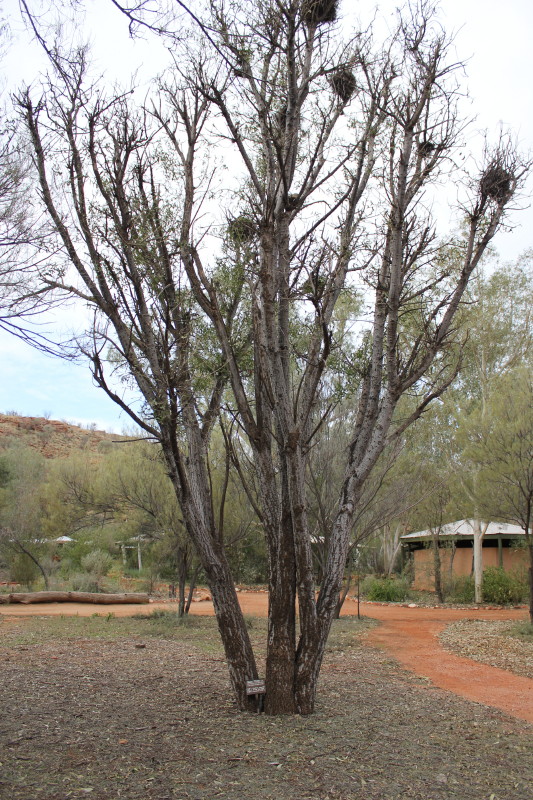 Looks like there’s a few nests in this one. Grows up to 15 metres with leaves that are shaped like a bat. it also has quite stunning red/orange flowers. It also loses its leaves when it flowers in spring and summer. All in all by visiting the Olive Pink Botanic Garden in Alice Springs I have learnt a great deal about new(to me) varieties of Wattles and Eucalypts and even new species of plants which is very exciting. Astounding to learn how the Indigenous people use these plants as well. Next time you’re in Alice Springs, do make sure you drop in and have a look, its well worth it. To finish up here are some photos of a native conifer, Callitris glaucophylla , White Cypress Pine grows to somewhere between 7 -20 metres with blue-green cypress like foliage usually with a single trunk. White Cypress Pine is known for being extremely Termite resistant. Quite a nice conifer that is widespread across the country.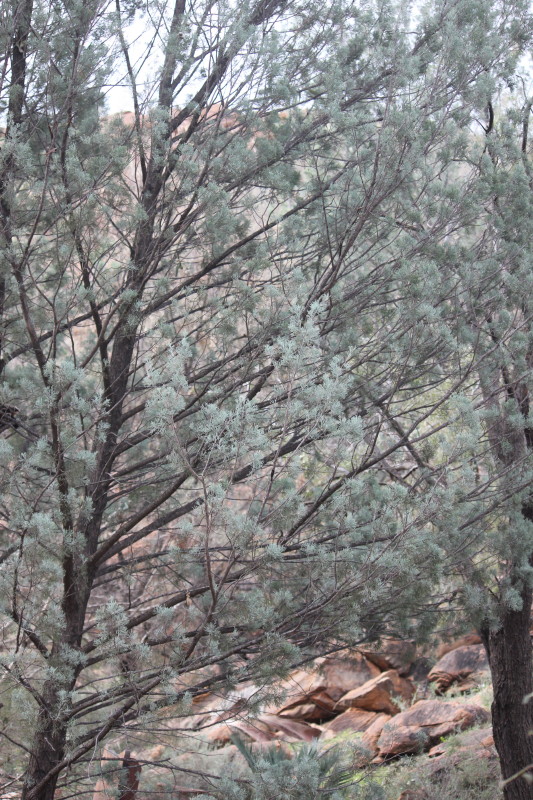
 Stay tuned for part 3, coming soon!!
 huon perennials