A Few things

Hi There!

I like to take a stroll through the garden most days, but springtime is a great time to do it because there is something happening all the time.  Plants are growing, buds are forming, flowers are opening and the weeds are growing.  Weeds are plants too you know.  They just happen to be in the wrong place for me.  Thistles growing in the chook yard would be fantastic!  Chooks love them, but when their in the garden it means work.  See what I mean: chook yard-thistles, magic!  Thistles-garden, non magical!

Now to a few things I saw today.  Here is Rosa xanthina looking magical in full flower, a great rose from china with primrose yellow single flowers.  It grows too about 2.5-3 metres each way and  flowers once during spring.

Rosa xanthina

I know this photo doesn’t really do it justice, but it is quite stunning seeing it in full flower.  Below is a closeup of the flowers.

Rosa xanthina

Here’s another great rose, Rosa omiensis pteracantha comes from china again, with a funny name again but commonly known as the Red winged thorn rose, has super large translucent red thorns on new growth.  This rose has unique single flowers which only have four petals, I think it’s the only rose to do so and their only about the size of a 10 cent piece and quite insignificant really, but alluring at the same time.  Confused?  So am I.
IMG_3059

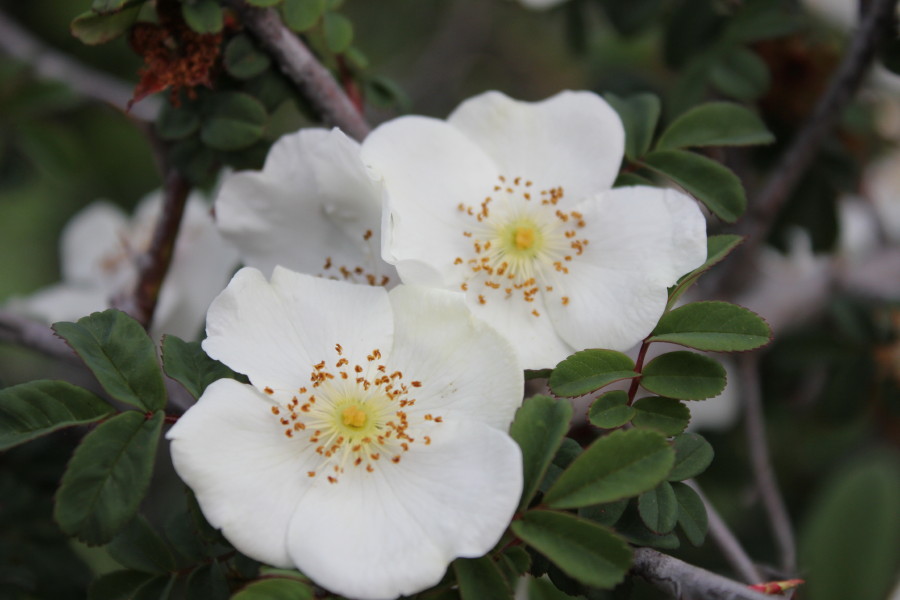
While we’re thinking about roses, here’s another one.  Rosa fedtshenkoana another fabulously named rose from a country other than China.  Russia, da! that’s right Russia.  This rose has pure white single flowers which are simply smashing!

Rosa fedtschenkoana

Quite a thorny brute too.

One more rose to round them out would be “Fruhlingsgold” simply put, a sight to behold in full flower in my opinion that is.  Pale lemon or pale yellow or pale egg yolk or whatever colour you think it is semi-double flowers on a large shrub to about 2-2.5 metres both ways simply make for a magnificent visual impact.

Rosa "Fruhlingsgold"

Up close and personal you will hear the mass sound of bee’s at work.

Rosa 'Fruhlingsgold"

One more photo for good measure.

Rosa 'Fruhlingsgold"

Now we will move on to something quite different.  Not sure what I call this?

IMG_3080

Here’s Aster alpinus looking all cheerful and everything, I think I need more of these.

Aster alpinus

Aquilegia alpina doing what it does best at this time of year, looking brilliant!

Aquilegia alpina

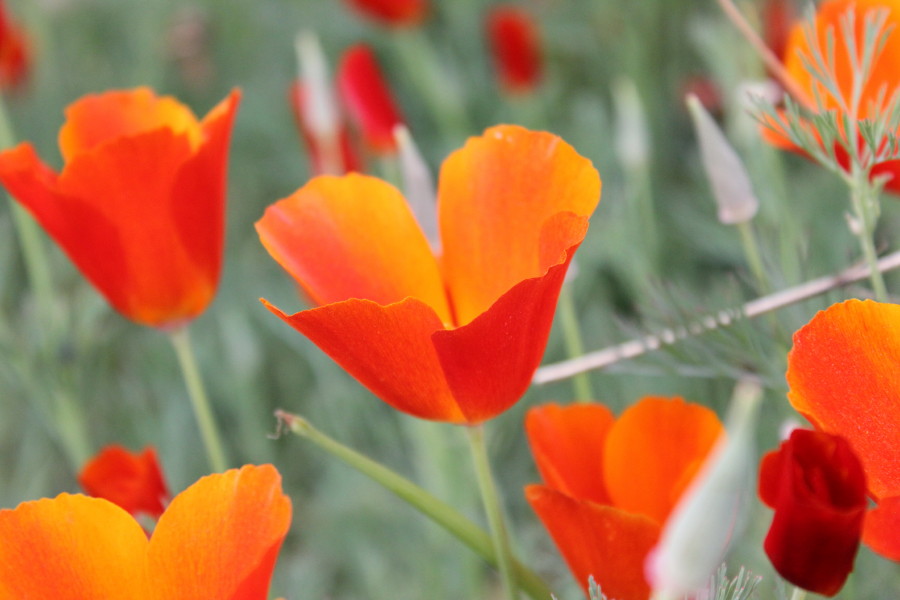
We will finish off with a bright splash of colour from Eschscholzia ‘Red Chief” just to really startle you!

Eschscholzia Red Chief

This is a Californian poppy which certainly makes an impact with its bright red/orange flowers imposed on grey foliage.  I think I need more of these!
Eschscholzia Red Chief

Cheers!


A splash of colour

Hi There!

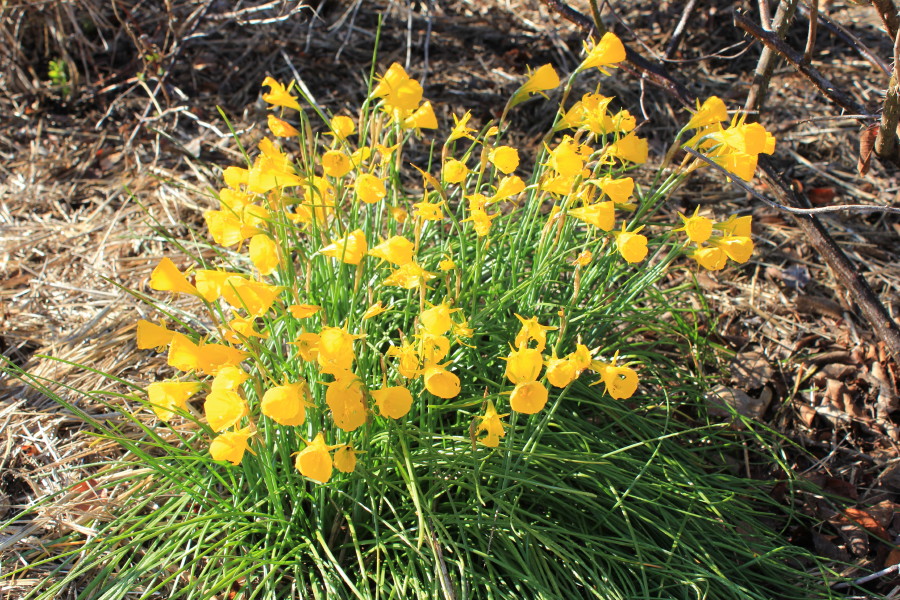
Winters run has finally come to an end and we seem to be firmly in spring weather patterns, according to the bureau that is.  So to see winter off, here’s some cheery daffodils doing what daffodils do best.  Looking cheery that is!

IMG_2619

IMG_2623

Below you can see this beautiful daffodil, click here to read more about it.

IMG_2628

Cheers!

What is…….

Hi there!

What is a waste product produced by plants?

Any guess’s???

Not sure, don’t know, couldn’t care less, whatever, LOL,.

I’ll narrow it down for you with 3 multiple choice answers.

Is it,

a. mycorrhizal association with fungus

b. autumn leaves

c. oxygen


If you picked a or b you would be wrong.  The answer is c.  Yes I know, hard to believe, oxygen a waste product produced by plants.  Thank goodness they produce waste!

How is this possible?  Without getting too technical, during the process of photosynthesis(plants making food for themselves using sunlight, carbon dioxide and water) the chloroplasts(specialised structures) inside leaves contain chlorophyll(green pigment that makes leaves green) which absorb energy from sunlight.  This absorbed energy is used to join the carbon dioxide and water together to form glucose.  The plant then uses this glucose as its energy source.  The oxygen which is a waste product from this chemical reaction is then released into the atmosphere.  Who would have thought!!

Plant a few and look after them….

Cheers!

A collection of snares and droplets

Hi There!

I love this time of year when the days are nice and mild, the nights are cool, the mornings are foggy and there’s a heavy dew.  It reveals the snares created by spiders(their webs) and the dew droplets that hang precariously from them and plants.  Sometimes they just look fake because their so odd-looking.  For this little show of nature you need to be up early or else you will miss it.  Next time its foggy, get out there early and have a look because you won’t see this show during the day.

Cheers!

A collection of Salvia flowers

Hi There!

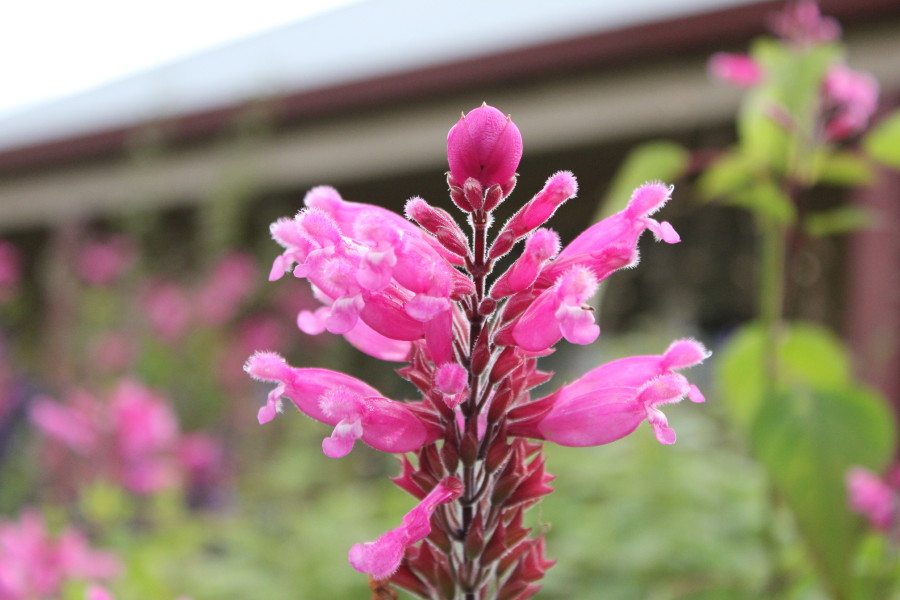
Autumn is a fantastic time for lots of different Salvia’s, and if your lucky and the weather is mild which it has been here,  these plants will reward you with an amazing show of colour.  Salvia’s are a great group of plants because they range from groundcover plants up to massive shrubs and even gigantic climbers if you happen to live in South America.  Their colour palette is amazing too, ranging from white to nearly black and every colour in between.  I could go on all day about them but that would bore some of you to tears.  But I will show you  some photo’s instead.  Remember! this is only a sample of the hundreds and hundreds of Salvia’s that are available.  Hope you enjoy!

Cheers!

A collection of Salvia leaves

Hi there!

When people find out that I grow a lot of Salvia’s, most of them think that I have a lot of the annual ‘Bonfire’ Salvia.  Not so!  There is not one ‘Bonfire’ Salvia in my garden.  I suppose it doe’s have its place in a garden somewhere though.  There is approximately 900-1100 species of Salvia around the world, this depends on what literature you read.  Then there’s countless thousands of hybrids and cultivars with an amazing array of names.  Below I have included just a few pictures of the leaves of Salvia’s to show you how varied they are.  They range in size from a couple of millimetres to 30cm, from silvers/greys to bright/dark greens and other colours, glossy to furry which makes them look white,, from entire leaves to heavily serrated jagged leaves, crazy shapes and more.  If you were to have a look at every Salvia, I’m sure there would be even more interesting leaves than the one’s I have.  Leaves can tell us lots of things, what habitats there from and the conditions they like and many more things.  Anyway, check out these Salvia leaves from my garden.

Cheers!