Hi there!
The photo’s will be writing the words today. Here are a few photos from my garden taken yesterday.
Enjoy!


The photo’s will be writing the words today. Here are a few photos from my garden taken yesterday.
Enjoy!
The photo’s will be writing the words today. Here are a few photos from my garden taken yesterday.
Enjoy!
The other day i heard a great way to remember which way to adjust our clocks when day light savings starts or finishes. It’s so simple and no doubt popular, but i had never heard it before. It goes like this, “Spring into Spring and Fall back in Autumn. Of course springing forward in Spring and falling back in the Fall/Autumn, easy! Clocks forward in Spring, clocks back in Autumn. Since its spring time, here are a few plants springing forward with exuberance.


Cheers!
This message will self destruct in 10 seconds……….
Hi there,
In this enthralling piece i am going to reveal to you why us horticulturists/botanists and gardeners use latin names for plants. Yes i know you think we’re crazy and why would you bother with this old antiquated language, but all will be revealed. Here’s a few classic examples of why we don’t use common names for plants, or try not to.
Did you notice anything about how the scientific names are written. These are controlled by the International Code of botanical Nomenclature and the International Code of Nomenclature for Cultivated Plants. Suffice to say there are rules on how we write scientific names
Species. The basic unit of classification is the species which is made up of two words. The first being the genus (generic name) and the second is the specific name ( known as the specific epithet). The two names are always written together and are known as the binomial. The generic name always, yes always starts with a capital letter and the specific epithet always starts with a lower case. They need to stand out as well, so should always be written in italics. There are other technicalities which involve subspecies and the like, but we might leave them for a rainy day or never!
Rosa glauca, gives us the genus Rose and glauca gives us a description of a grey like coating or bloom on the stems of this rose and the colouring of the foliage which is said to have a grey like ting. So the specific epithet gives us description to some degree of the plant or a particular feature of that plant. Here’s another example, Salvia taraxifolia, gives us the genus Salvia and the specific epithet describes the leaves which are Dandelion like, tarax being the genus of dandelion and folia gives us foliage like.
Cultivar. Cultivated plants use the genus for the first name and then some other name which can be anything from a person to a town or place or any other meaning or just plain whatever. These are always written like so. Salvia ‘Silkies Dream’. Always italics with the first letter capital for the genus and normal writing for the named cultivar with appropriate capitals.
Hope that hasn’t muddied the waters too much, but when you see me using these scientific names, the above is the reasons why. Happy gardening and
Cheers!
Hi there,
Last week I had one of our cars booked in to get new tyres put on it and on the way there, you guessed it, I was pulled over in our little town by a cop from a big town. “License please”, here you go(pass over license). “Is this your car your driving”, yes. “You been drinking today”, no(bear in mind its 9:50am Saturday morning). “How many did you have last night”, What the!(no I didn’t say that, maybe I thought it though, what’s with the Spanish inquisition!). None sir, “Here ,blow into this in a continuous breath until I say stop”, phuuuuuuuuuuuugh. ‘Stop, Thanks”, no worries. Then I see him start looking at the tyres and I’m thinking, “And Here we go” (like how the Joker says it in Batman). He walks around the car checking each tyre, then comes back to me and before he can say anything, I go. “You won’t believe this but I actually have a 10:30am appointment at Tyrepower to get my tyres done and that’s where I was heading”. “No worries, but I am giving you a defect notice, it’s not a fine but its to make sure that you get them fixed within 7 days”. Groan( inside I did, I think I muttered “Sure officer, three bags full”).
So, the long and the short of it is
That’s my new definition of Irony, you just wouldn’t dream about it.
Cheers.
Hi There,
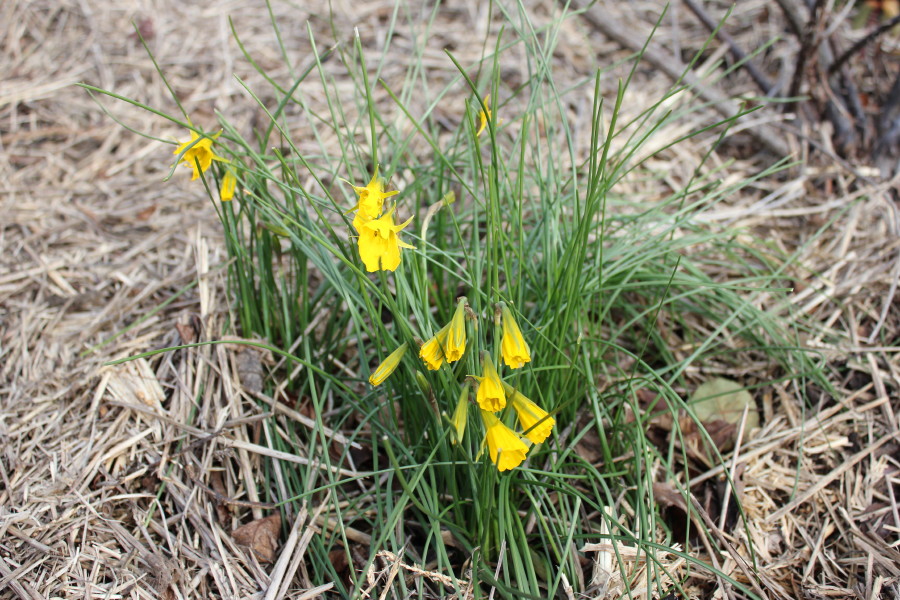
While I was weeding a few weeks ago I came across a clump of grass like foliage which reminded me again of the surprise that bulbs bring. They hide underground for the majority of the year, then the send up foliage then comes the flowers, then set seed and then the foliage dies off and the bulb pulls the nutrients out of the leaves back into itself to provide energy for itself and grow for the following season. In the photo below we have the said clump of weedy grass like clump which is Narcissus bulbocodium ssp. bulbocodium. Now your thinking WHAT THE!! but don’t panic it’s also known as one of the charming hoop petticoat daffodils.

Doesn’t look like much doe’s it. All will be revealed later on. This species is native to parts of Spain, Portugal, France and Morocco and grows in the mountains on acid soils. Foliage is a nice chive green colour and looks similar as well – round and about 15cm tall.
In the photo below you can see some buds starting to come up.
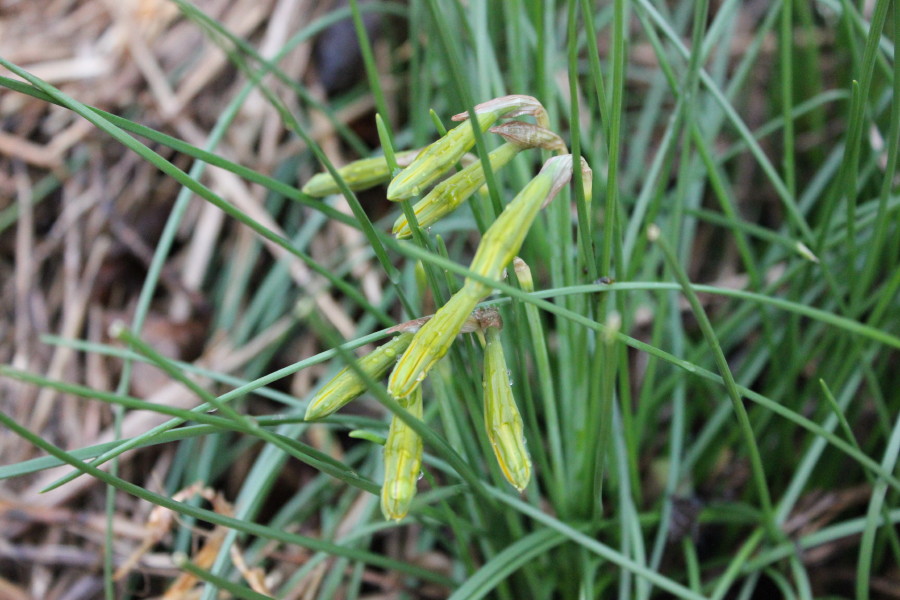
Not long after we see the beautiful cheery sulphur yellow blooms that look like hoop petticoats if you turn your head on to the side. Try it.

The above ones are not yet fully open, so try looking at the photo below with your head on the side. Now you get the picture!

Why have you got your head on the side, you look quite ridiculous. Here’s a couple more photos just for the fun of it. With bulbs there is an expectation when you notice the foliage for what’s to come and the reward is great when they flower. That’s why I like them. Cheers.

Another great family of plants at this time of year is the genus Helleborus. Great for winter/early spring colour. Here are just a few from my garden. Enjoy!


Hello again.
The clouds are hanging low and its grey again, the winds blowing a gail and its raining again. Funny that, its winter time still. Here’s some more colourful things to lift the spirits of you all. Narcissus are a great group of bulbs that are very cheerful with colours ranging from whites to yellows and a few have white and pink or apricot as well. Easy to grow, easy to look after and easy everything else. The best part of them is when they flower, which is winter/early spring and the most common and most loved of them all is no doubt the stately King Alfred Daffodil. Being common is not bad either. If it was Agapanthus, I do see a problem now, but I digress. King Alfred’s are much-loved because they are cheerful and breezy and very colourful particularly on a grey day. I think I need to plant some more.


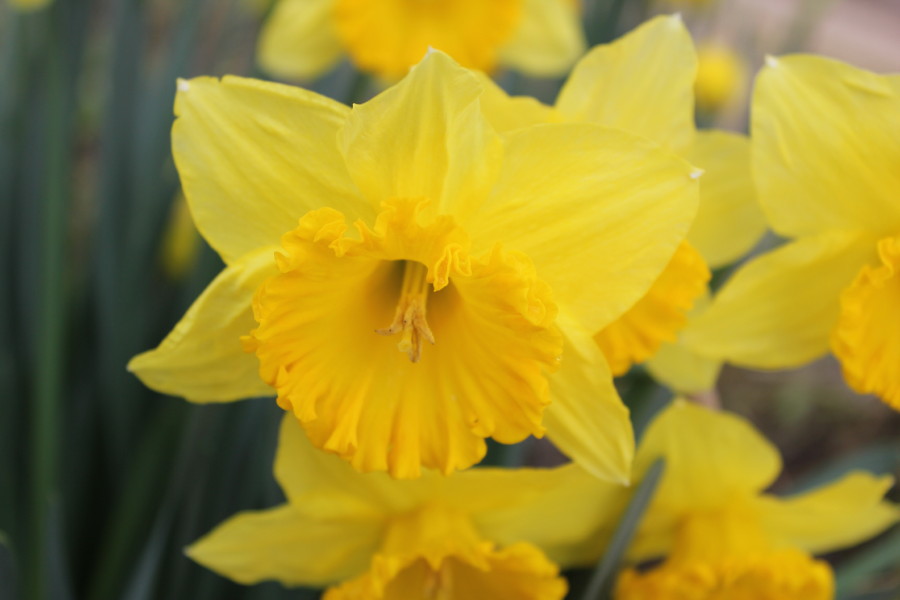
I definitely need to plant some more.
Glad to see the sun has made an appearance again. I know it’s always there, it doesn’t go on a holiday or take a catnap, it’s either in the southern hemisphere or the northern every day. The relentless grey clouds have made it vanish for a while. Here’s some pictures with bright yellow sunny colours to extend the sunshine a bit.
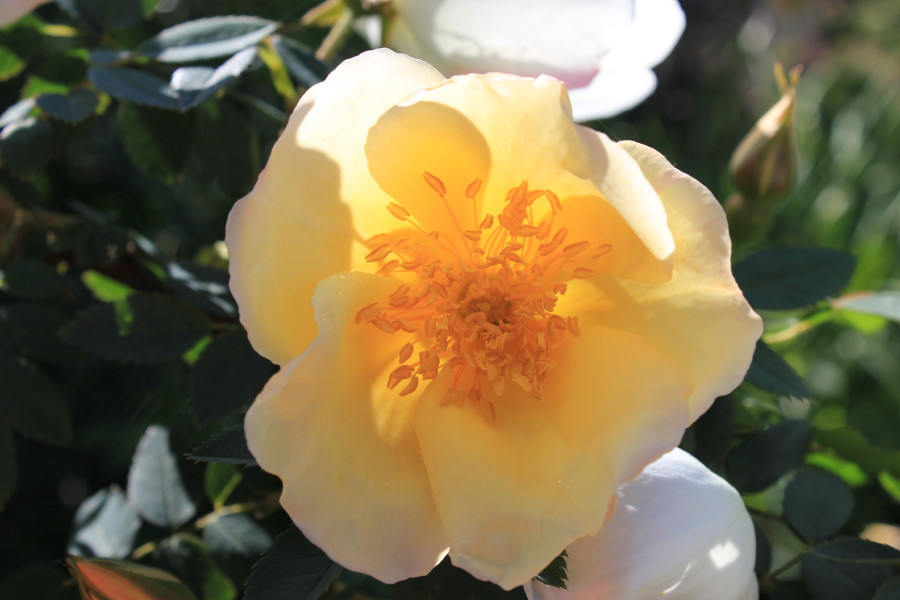


Just to let you know, the winds will pick up again this evening and another cold front will be here. Smile!
 huon perennials